
L-Theanine in Matcha: How Much Per Serving, and Matcha vs Coffee
2026-11-15
L-theanine is an amino acid that the tea plant makes in its roots and stores in its leaves, and a standard 2 g bowl of ceremonial matcha delivers roughly 36 to 89 mg of it. Coffee delivers none. That single difference is why two drinks with almost identical caffeine can feel so unlike each other.
Most of what gets written about L-theanine online skips the numbers and goes straight to promises. This article does the opposite: where the compound comes from, how much ends up in your cup at 1 g, 2 g and 4 g, how matcha compares with steeped tea and with coffee, what it does to the taste, and what European regulators actually concluded when they looked at the health claims.
- What it is: L-theanine (γ-glutamylethylamide) is a free amino acid found almost exclusively in Camellia sinensis, the tea plant. It was first described in Japan in 1949 and isolated from gyokuro leaf shortly after.
- How much in matcha: tea-ceremony-grade matcha holds more than 1.8 g per 100 g of dry weight, which is over 18 mg per gram (Horie, Ema & Sumikawa, Journal of Cookery Science of Japan 2017;50(5):182–188). Published matcha samples reach as high as 44.65 mg/g.
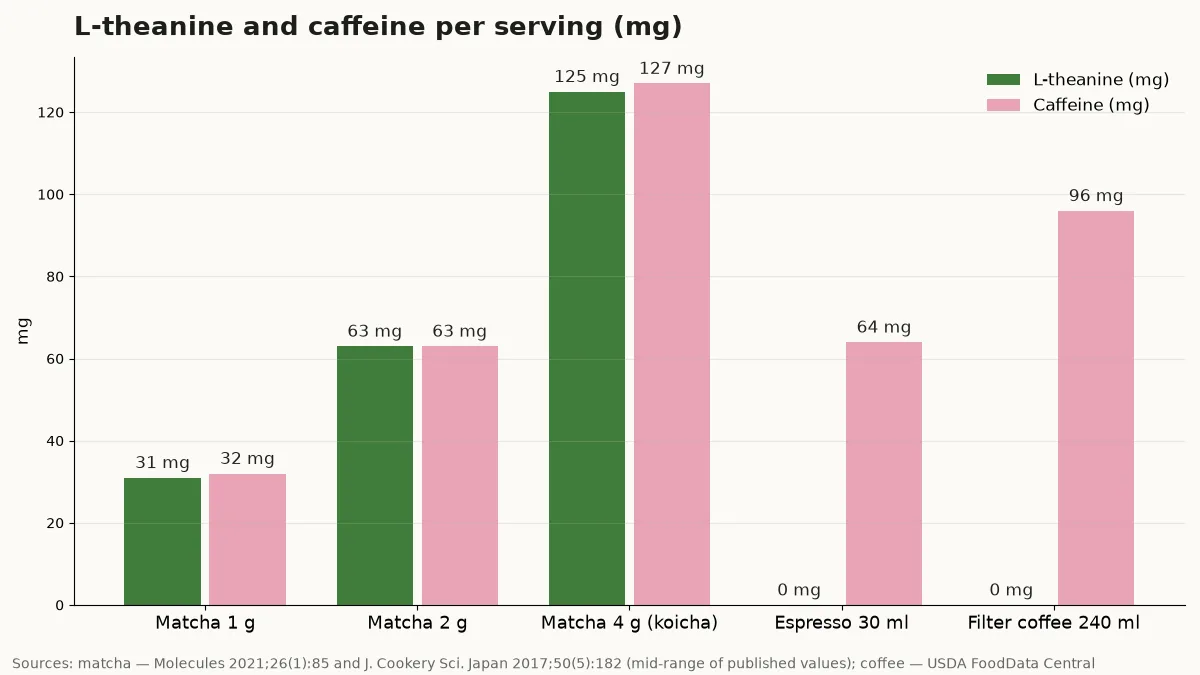
- Per standard serving (2 g): about 36–89 mg of L-theanine, alongside 38–89 mg of caffeine. Roughly one to one.
- Coffee: 0 mg. L-theanine is not a coffee compound at any roast or brew strength.
- Why matcha beats steeped tea: the leaf is shaded for weeks before picking, which keeps theanine from breaking down, and you swallow the whole powdered leaf instead of throwing it away.
- What authorities say: EFSA assessed health claims for L-theanine in 2011 and did not accept them. Taste and chemistry are solid ground; health effects are not.
What L-theanine actually is
L-theanine is a free amino acid, chemically γ-glutamylethylamide, produced in the roots of the tea plant and transported up into the new shoots. It is not a vitamin, not a stimulant and not a catechin. It sits in the leaf as a soluble, slightly sweet compound, and it is the single largest contributor to the savoury depth that tea drinkers call umami.
The compound is close to unique. Outside Camellia sinensis and a couple of its relatives, the only notable natural source anyone has found is a mushroom, Xerocomus badius. No cereal, no fruit, no coffee bean. If you want L-theanine from food rather than a capsule, you are drinking tea or you are not getting it.
Japanese chemistry gets the credit for finding it. Sakato described the new amide in 1949, and a Kyoto laboratory isolated it from gyokuro the following year — gyokuro being, not coincidentally, the other great shade-grown Japanese tea. That link between shade and theanine was spotted early and it still drives how tencha, the leaf that becomes matcha, is grown today.
Theanine, caffeine and catechins: three compounds, three jobs
It helps to keep the trio straight, because people mix them up constantly.
- Caffeine is the stimulant. Bitter on the tongue, fast into the blood.
- Catechins (EGCG and its relatives) are the astringent polyphenols. They give green tea its dryness and grip, and they build up in leaf that gets full sun.
- L-theanine is the amino acid. Sweet-savoury, soft, and it increases in leaf that is kept out of the sun.
Shade pushes the balance one way, sunlight the other. That is the whole agronomy of matcha in one sentence.
How much L-theanine is in one serving of matcha?
A standard 2 g serving of ceremonial-grade matcha contains roughly 36 to 89 mg of L-theanine. The spread is wide because matcha is an agricultural product, not a pill: cultivar, harvest, shading time and how much stem went into the mill all move the number.
The firm floor comes from the Japanese research. Horie, Ema and Sumikawa analysed ten grades of tencha and the powdered teas on sale, and found tea-ceremony-grade matcha carried more than 1.8 g of theanine per 100 g of dry weight — over 18 mg per gram — while most industrial-grade matcha and powdered green tea sat below that. The upper end comes from a review in Molecules that cites samples reaching 44.65 mg/g.
| Dose | Typical drink | L-theanine | Caffeine | Servings per 40 g tin |
|---|---|---|---|---|
| 1 g | Light iced latte | 18–45 mg | 19–44 mg | 40 |
| 2 g | Standard bowl or latte | 36–89 mg | 38–89 mg | 20 |
| 3 g | Strong 400 ml latte | 54–134 mg | 57–133 mg | 13 |
| 4 g | Koicha (thick matcha) | 72–179 mg | 76–178 mg | 10 |
Figures: theanine from Journal of Cookery Science of Japan 2017;50(5):182 and Molecules 2021;26(1):85; caffeine 18.9–44.4 mg/g from the same Molecules review.
Notice the ratio. In matcha, theanine and caffeine arrive in roughly equal amounts, give or take the variation between batches. That near-1:1 balance is a genuine, measurable feature of shade-grown powdered tea, and it is the one fact about matcha that most buyers have never heard.
Why matcha gives you more L-theanine than a cup of green tea
Matcha delivers more L-theanine than steeped green tea for two separate reasons: the leaf is grown with more of it, and you consume all of it instead of discarding most of it with the spent leaves.
Start with the field. Tencha bushes are covered for roughly three weeks before picking — traditionally with reed screens and straw, now usually with black synthetic netting. Cut the light and the plant stops converting theanine onward into catechins. The Molecules review puts it plainly: because the plants are shade-grown, theanine does not break down, so tencha leaves contain larger amounts of it than other teas. The leaf also goes pale and soft, which is why matcha looks like a highlighter pen and sencha does not.
Then the cup. When you steep sencha, you extract part of what is in the leaf and tip the rest into the bin. Theanine is water-soluble and extracts readily, but extraction is never complete, and whatever stays in the wet leaf never reaches you. Matcha skips that loss entirely. The leaf is stone-milled to a powder of a few micrometres, suspended in water, and swallowed. Every milligram in the powder goes down with the drink.
| Drink | Serving | Do you consume the leaf? | L-theanine | Caffeine |
|---|---|---|---|---|
| Matcha | 2 g powder | Yes, all of it | 36–89 mg | 38–89 mg |
| Green tea, steeped | 240 ml | No, leaf discarded | Part of the leaf content | ~29 mg |
| Black tea, steeped | 240 ml | No, leaf discarded | Lower — leaf is unshaded and oxidised | ~48 mg |
| Espresso | 30 ml | No | 0 mg | ~64 mg |
| Filter coffee | 240 ml | No | 0 mg | ~96 mg |
Caffeine figures for steeped drinks and coffee: USDA FoodData Central. We have deliberately left the theanine cells for steeped tea qualitative — published per-cup numbers vary so much with leaf, dose, water temperature and steeping time that a single figure would mislead you.
Matcha vs coffee: the part coffee cannot give you
Coffee contains no L-theanine. Not a trace worth measuring, at any roast, grind or brew ratio — the compound simply is not part of the coffee plant’s chemistry. So the comparison is not “which has more” but “one has it and one does not”.
Where they do meet is caffeine. A double espresso and a 2 g bowl of matcha land in a similar range, somewhere around 60 to 90 mg depending on your beans and your powder. Put the two side by side and the caffeine columns look comparable; the theanine column does not exist on the coffee side.
People then ask whether that difference explains why matcha “feels different”. Honest answer: a lot of drinkers report it does, there is published research on the caffeine–theanine combination, and the regulators who reviewed that research were not convinced enough to approve a claim. We sell matcha and we are still going to tell you that, because the alternative is repeating marketing lines we cannot stand behind. What we can say without hedging is the measurable part: matcha brings an amino acid to the cup that coffee does not, and you can taste it.
A practical note on swapping one for the other
If you are replacing a morning double espresso with matcha and you want a similar caffeine dose, 2 g is your starting point, not 1 g. One gram makes a pleasant, light drink and gives you roughly a third of a filter coffee’s caffeine, which is why people who switch on a 1 g scoop often decide matcha “does nothing” and go back. Weigh the first few until your chashaku scoop is calibrated: two heaped scoops of the bamboo spoon is close to 2 g for most people, but scoops and wrists differ.
What L-theanine does to the taste of your bowl
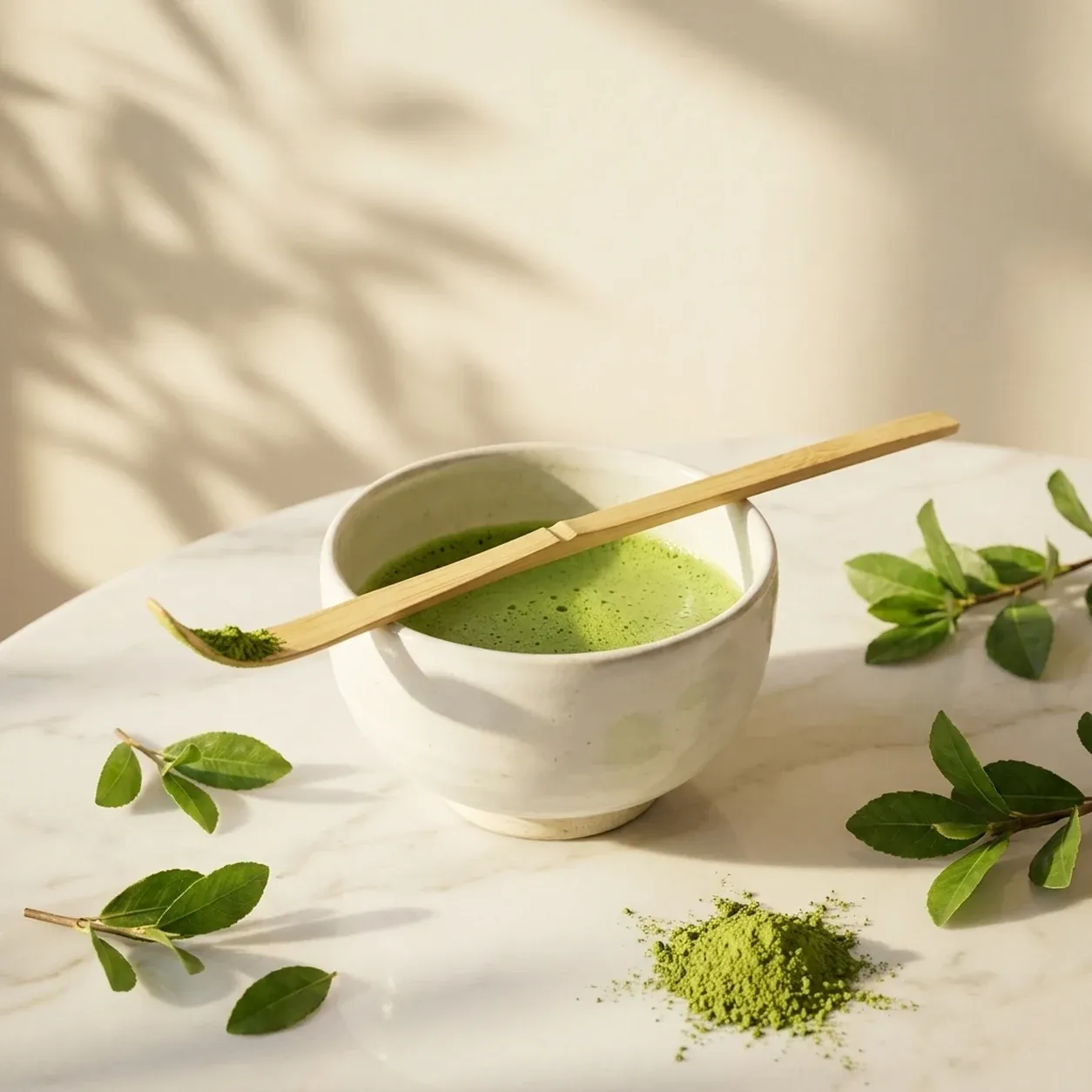
L-theanine is the compound responsible for the savoury sweetness in good matcha — the broth-like quality Japanese tasters call umami, which rounds off the bitterness of caffeine and the astringency of catechins. In a bowl of high-theanine matcha the first impression is sweet and almost creamy, and the green, grassy bite arrives a moment later.
This is the part of the L-theanine story you can verify yourself, today, without a laboratory. Whisk 2 g of a good ceremonial matcha in 70 ml of water at about 75 °C and drink it plain. Then do the same with a cheap culinary powder. The difference you taste between them is mostly theanine against catechins: the first is round with a sweet finish, the second goes flat and harsh and dries the sides of your tongue.
It also explains an old rule that most people follow without knowing why. Boiling water pulls catechins and caffeine out hard and fast, while the sweet amino character is overwhelmed — so the bowl tastes bitter. Water at 70–80 °C keeps the balance where the grower intended it. Nothing is being destroyed at 100 °C; theanine is heat-stable enough to survive a kettle. The flavour balance just tips against you.
At the shop we see this confusion weekly. Someone writes that their new tin tastes bitter and asks whether the matcha is bad. Nine times out of ten the powder is fine and the kettle was used straight off the boil.
What the research says — and what EFSA decided
The European Food Safety Authority assessed health claims for L-theanine in 2011 and concluded that a cause-and-effect relationship had not been established. The claims examined covered improved cognitive function, alleviation of psychological stress, maintenance of normal sleep and reduction of menstrual discomfort, and none of them was substantiated (EFSA Journal 2011;9(6):2238).
That is the legal and scientific position in the European Union, and it is why you will not find a health promise anywhere on this page or on our product cards. Research into L-theanine continues, including work on what happens when it is taken alongside caffeine, but “studies exist” and “an effect is established” are different statements, and only the second one would justify a claim.
Caffeine is the one compound in your bowl with a firm official number attached. EFSA considers habitual intakes up to 400 mg a day, and single doses up to 200 mg, not to raise safety concerns for healthy adults; for pregnant women the figure is 200 mg a day from all sources. At 2 g per bowl you are looking at roughly 38–89 mg, so a few bowls fit comfortably inside that budget — but add espresso, cola and dark chocolate before you decide how many.
How to get more L-theanine out of the matcha you already own
You cannot add theanine to a powder that does not have it, but you can avoid throwing away what you paid for. Four things actually matter.
- Buy first-harvest, shade-grown matcha. Theanine tracks the spring flush and the weeks under cover. A late-harvest culinary powder had more sun and less shade, and the numbers follow. This is the one decision that changes the content in your tin.
- Weigh your dose. Theanine per cup is dose times concentration, and the dose is the half you control. Moving from a vague 1 g scoop to a measured 2 g doubles everything in the bowl.
- Drink the whole bowl, sediment included. Matcha is a suspension, not an infusion. Powder that settles at the bottom and gets rinsed down the sink is content you bought and did not drink. Whisk properly, drink within a minute or two, and swirl the last mouthful.
- Keep the tin cold, closed and dark. Oxygen, light and warmth degrade matcha’s colour and aroma; a tin left open on a sunny windowsill loses its character fast. Close it after every use, keep it away from the hob, and finish a 40 g tin within six to eight weeks of opening.
What does not help: hotter water, longer whisking, a second whisking of the same powder, or “activating” the powder in any way. Matcha is already everything the leaf had. There is nothing left to extract.
The products we use for this at yerbador.com
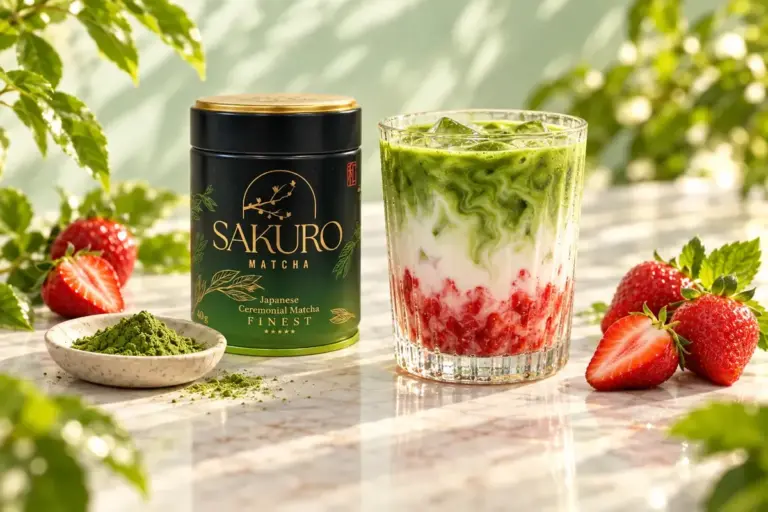
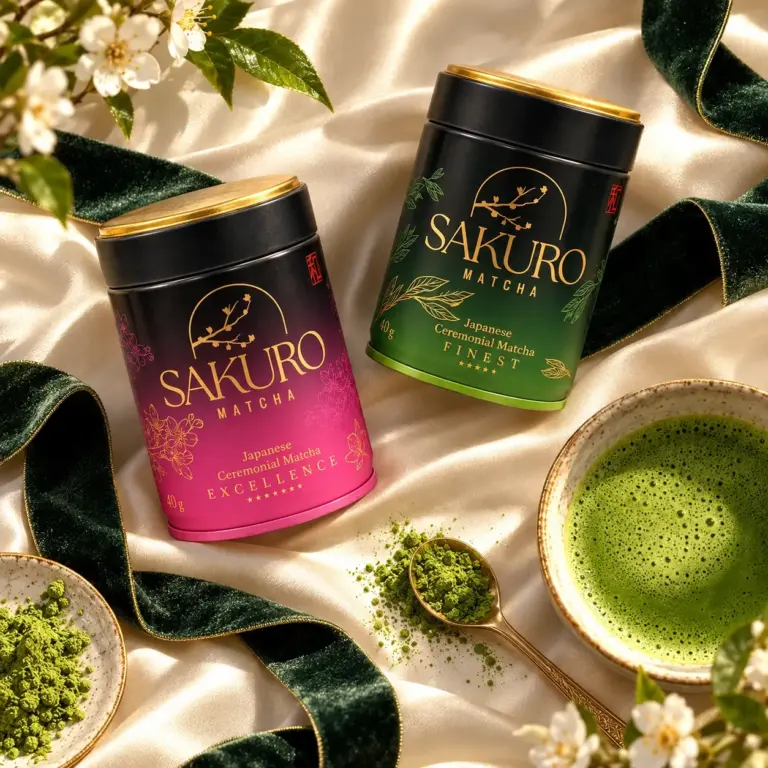
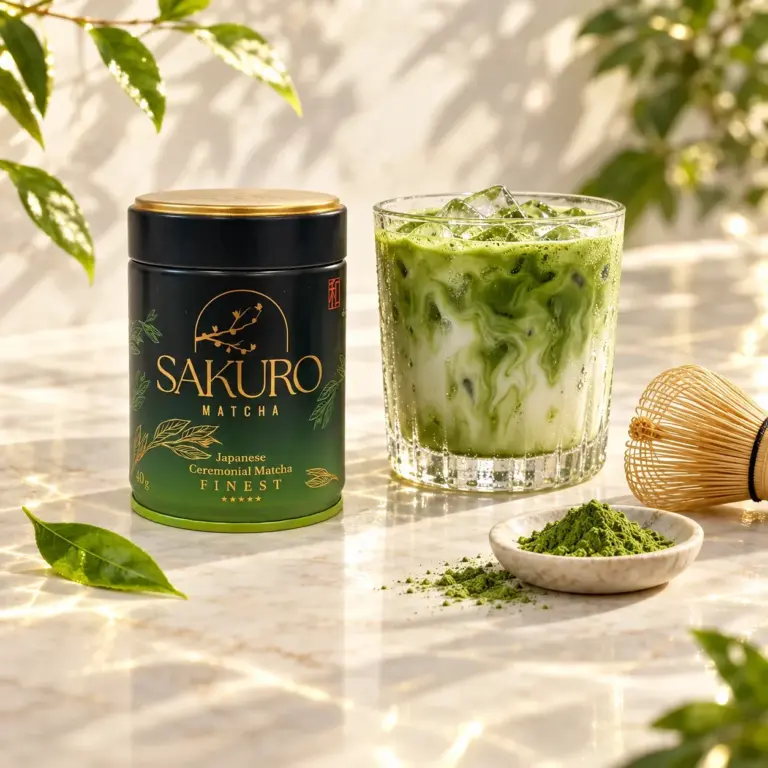
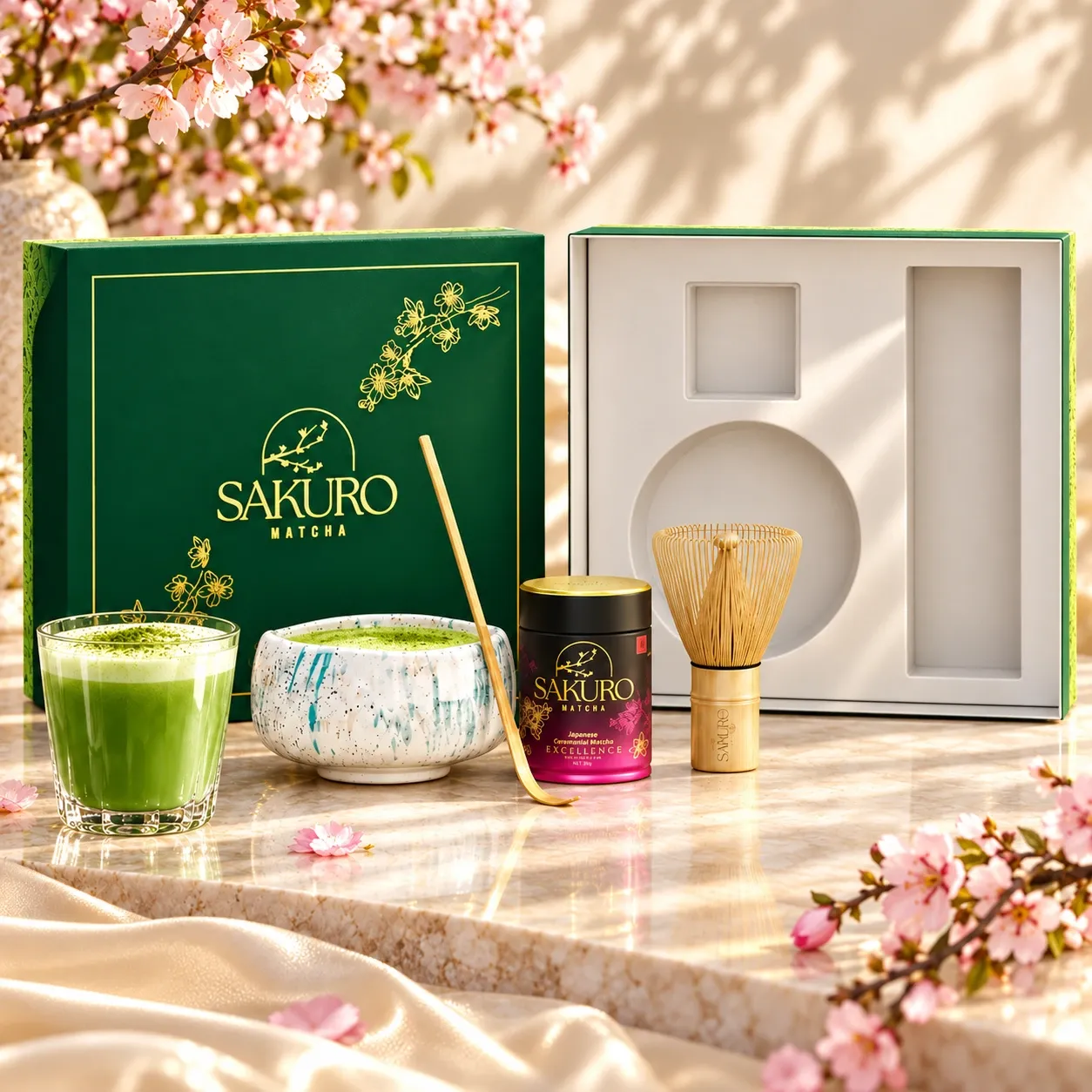
Sakuro Matcha Finest is a Japanese ceremonial-grade matcha from Shizuoka, sold in a 40 g tin at €23.90 — about 20 servings of 2 g, so €1.20 per bowl. It is the one we point people to when they want a daily matcha that also survives being poured over milk.
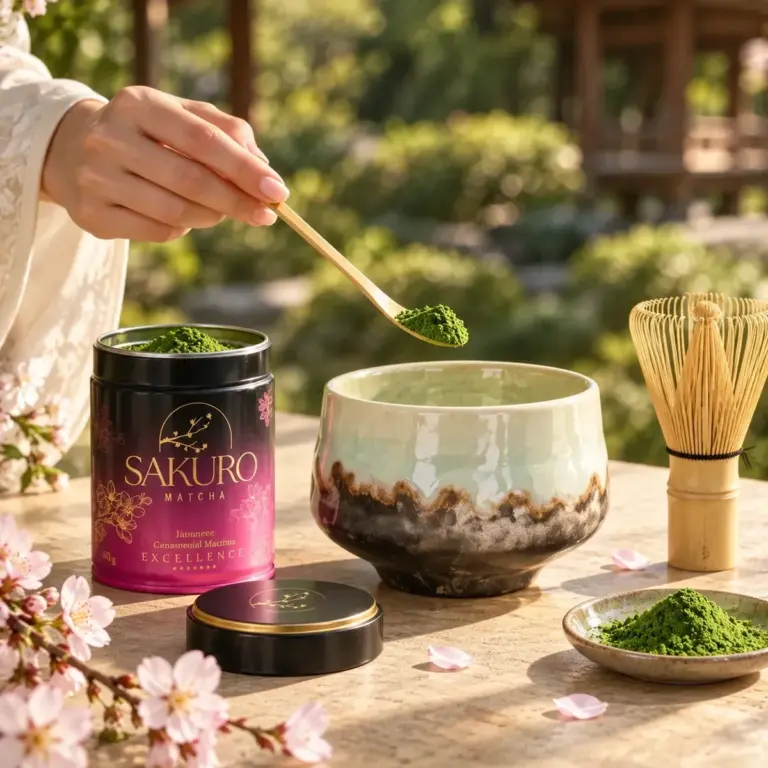
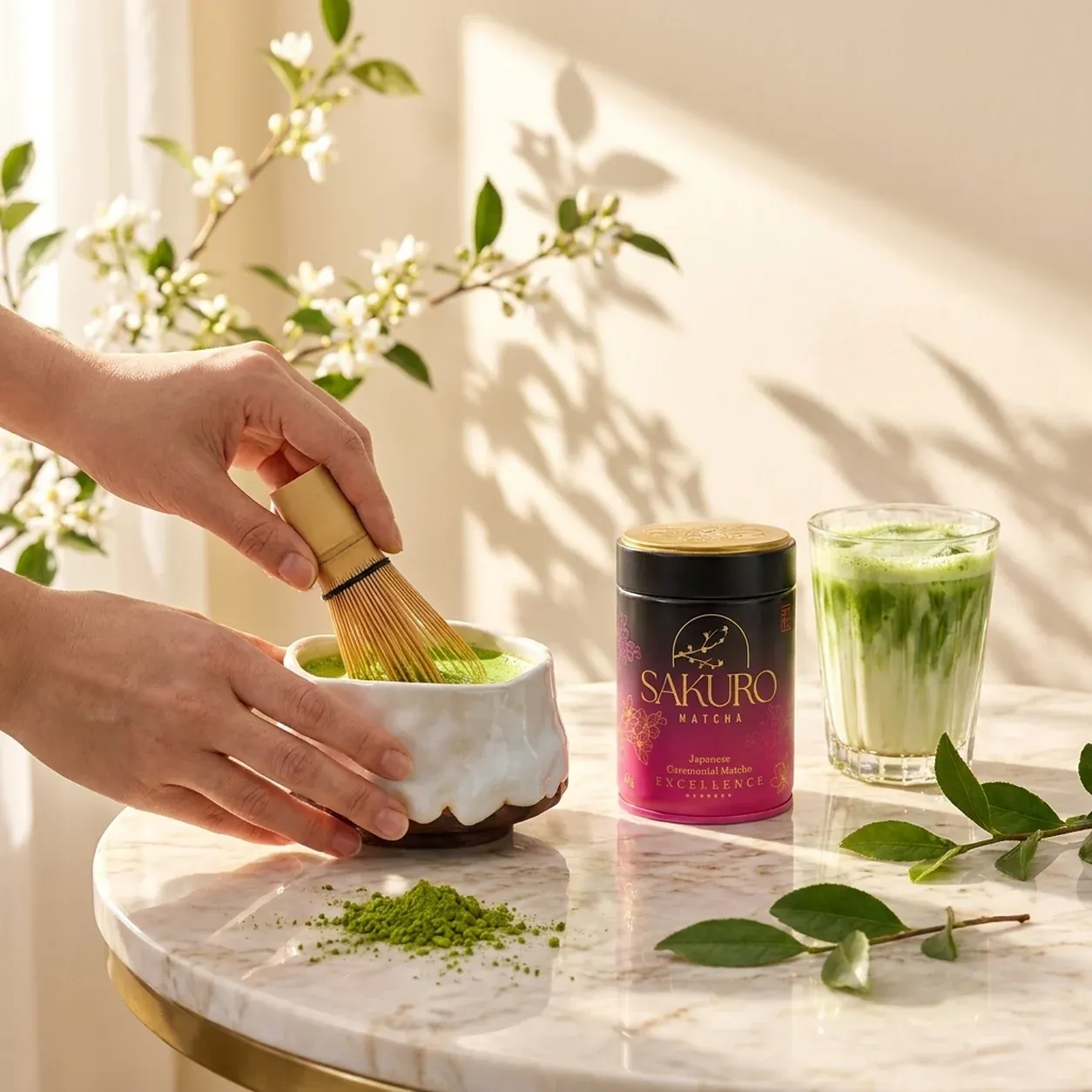
Sakuro Matcha Excellence is the higher grade from the same Shizuoka source, 40 g for €26.90, which works out at €1.35 a bowl. Sweeter, softer, better drunk plain in water where there is nothing to hide behind. If you only want one tin to taste what theanine does, make it this one.
Undecided? The Finest 40 g + Excellence 40 g set is €46.90 and lets you run the two-bowl comparison properly. A bamboo chasen at €14.90 does a better job of suspending the powder than any spoon, which matters more than people expect — unsuspended powder is theanine sitting at the bottom of the bowl.
Cafés: putting the theanine story on your menu honestly
Cafés ask us how to talk about L-theanine on a menu without crossing into claims they are not allowed to make. The safe and accurate version is short: matcha contains an amino acid called L-theanine that coffee does not, it is what gives good matcha its sweet, savoury taste, and shade-growing is why there is so much of it. Taste and origin are yours to sell. Health effects are not, and EFSA’s 2011 assessment is the reason.
The economics run the other way from the retail price. Bought by the kilo, Sakuro Finest is 480 PLN per kg net, which at the National Bank of Poland rate of 4.4070 PLN to the euro on 13 November is about €109 per kg — roughly €0.22 for a 2 g serving. Excellence is 690 PLN per kg net, about €157 per kg, or roughly €0.31 per serving. Both are indicative conversions at that day’s rate; the binding offer comes from Ewelina.
| Format | Grade | Price | Per 2 g serving | Servings |
|---|---|---|---|---|
| Tin, 40 g | Finest | €23.90 | €1.20 | 20 |
| Tin, 40 g | Excellence | €26.90 | €1.35 | 20 |
| Bag, 1 kg (wholesale) | Finest | ~€109 net | ~€0.22 | 500 |
| Bag, 1 kg (wholesale) | Excellence | ~€157 net | ~€0.31 | 500 |
Wholesale orders go out in 1 kg bags and ship from Poland within the EU. Volume discounts: 5 % from 3 kg, 10 % from 5 kg. For prices, samples and a binding quote, write to Ewelina at [email protected] or call +48 515 025 329.
Five mistakes people make with L-theanine and matcha
- Expecting a supplement dose from a bowl. L-theanine capsules are typically sold in doses well above what a 2 g bowl contains. If you are comparing a tin of matcha to a bottle of capsules on milligrams alone, matcha will lose — but you are drinking a tea, not dosing an isolate.
- Buying culinary powder and expecting ceremonial chemistry. Late-harvest, less-shaded leaf has less theanine and more astringency. It is the right choice for a cake and the wrong one for a bowl.
- Using boiling water and blaming the tin. The theanine survives; the balance of flavour does not. Let the kettle stand two or three minutes.
- Leaving powder in the bottom of the bowl. Poor whisking leaves a green sludge behind. Use a chasen, whisk in a W, drink it while it is still suspended.
- Treating any green powder as matcha. Ground sencha is cheaper, browner, grown in full sun and lower in theanine. The label will not always tell you, but the colour and the first sip will.
FAQ
How much L-theanine is in one cup of matcha?
Roughly 36 to 89 mg in a standard 2 g serving. Ceremonial-grade matcha holds over 18 mg of theanine per gram according to Japanese analysis, and published samples reach up to 44.65 mg/g, so the figure depends on the grade and the harvest. A 1 g iced latte gives you about half that; 4 g of koicha gives you roughly double.
Does coffee contain L-theanine?
No. L-theanine is found almost exclusively in the tea plant, Camellia sinensis, and in one mushroom species. No amount of roasting, grinding or brewing puts it into coffee. A double espresso and a 2 g bowl of matcha can carry similar caffeine, but only the matcha brings theanine with it.
Does matcha have more L-theanine than regular green tea?
Yes, for two reasons. The leaf used for matcha is shaded for about three weeks before picking, which stops theanine from breaking down, and you drink the powdered leaf whole instead of steeping it and discarding it. Steeped tea leaves part of its theanine behind in the spent leaf; matcha leaves none.
Does hot water destroy L-theanine in matcha?
No. Theanine is stable enough to survive boiling water, so you do not lose the compound by using a hot kettle. What you lose is flavour balance: very hot water pulls catechins and caffeine forward and the bowl tastes bitter. Whisk at 70–80 °C for taste, not for chemistry.
Is the L-theanine in matcha the same as an L-theanine supplement?
It is the same amino acid, but not the same dose or the same context. Supplements isolate it; matcha delivers it together with caffeine, catechins, chlorophyll and the rest of the leaf. If you want matcha for the taste and the ritual, the tin is the right purchase. If you want a specific milligram dose of an isolated compound, that is a different product and a conversation for a pharmacist.
How much matcha would I need for 200 mg of L-theanine?
Somewhere between 4.5 g and 11 g of powder, depending on the grade — and that same amount brings roughly 85 to 490 mg of caffeine with it. EFSA puts the figure that does not raise safety concerns at 400 mg of caffeine a day for healthy adults and 200 mg a day in pregnancy, so chasing a theanine number by drinking more matcha runs into the caffeine ceiling first. Drink matcha because you like it, not to hit a milligram target.
Does ceremonial grade really contain more theanine than culinary?
Generally yes. The Japanese analysis found tea-ceremony-grade matcha above 1.8 g per 100 g of dry weight while most industrial-grade matcha and powdered green tea fell below that. The words on the tin are not regulated, though, so check the harvest and the colour rather than the adjective — we go through how to do that in our guide to matcha grades ranked by colour, taste and price.
If you want to see the theanine-versus-catechin balance for yourself, do it this week: 2 g of a good ceremonial matcha, 70 ml of water at 75 °C, whisked and drunk plain, with no milk and no sugar in the way. Then read our breakdown of how much caffeine is in matcha and you will have both halves of what is actually in your bowl.
Discover our TOP products!

Your dream figure

Discover new flavors
Yerba mate with tea
Accessories
Superfoods


Certified raw honeys from Poland

Check the current price
free shipping
Up to 90 days
free returns
24 H
shipping