
Matcha shortage 2026: what Japan’s record auctions mean for your cup
2026-11-13
The matcha in your tin starts life as tencha: shade-grown leaf, steamed, dried, stripped of stems and veins, and only later stone-ground into powder. Tencha is sold at auction in Japan, and the first auction of the season is where the price of everything downstream gets decided. On 13 May 2026, at the Uji Tea Distribution Center in Joyo, the average winning bid was 14,127 yen a kilo. A year earlier the same auction averaged 8,235 yen. That is the matcha shortage 2026 in one number: 1.7 times, in twelve months.
It is also the number that gets misread most often. Japan did not run out of tencha. It made more of it in 2025 than in 2024, and brought fifteen times more leaf to that first auction than the year before. What is actually happening is narrower than a failed harvest, and far harder to fix.
What happened at the Kyoto auction in May 2026
375 lots. 25,188 kilos of tencha on offer. Fifty companies, a hundred buyers in the room. The average winning price was 14,127 yen per kilo, which JA Zen-Noh Kyoto said was the highest first-auction average in ten years (Kyoto Shimbun, 13 May 2026; Shokuhin Shimbun, 21 May 2026). At the National Bank of Poland’s rate on 13 November 2026, that is roughly 79.91 euro a kilo of raw leaf.
The spread tells you more than the average does. The cheapest lot sold for 7,200 yen a kilo, the dearest for 40,021. In 2025 the same auction ran from 4,121 to 11,393 yen. So the floor rose by about three quarters in a year, while the ceiling went up three and a half times. Buyers are not fighting over tencha in general. They are fighting over the small share of it that can be ground into something you would whisk and drink neat.
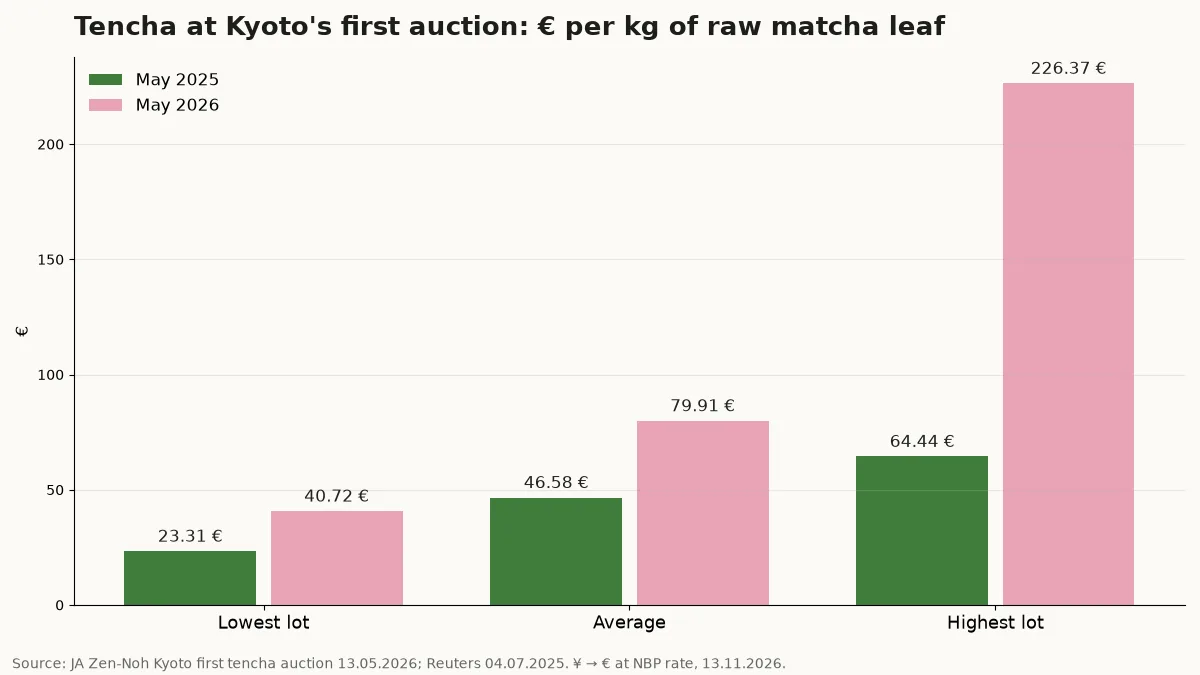
And one figure almost nobody quotes: 25,188 kilos came to that auction, against 1,678 kilos in 2025. Fifteen times the volume, and the price still went up. More leaf is reaching the market every season. Demand is simply arriving faster.
For context on where this started: the May 2025 auction that now looks cheap was itself a record, up 170% year on year, beating a previous high of 4,862 yen set back in 2016 (Reuters, 4 July 2025, citing the Global Japanese Tea Association). Two record years, stacked.
Three reasons the price keeps climbing
1. Export demand doubled in a single year. Japan’s green tea exports were worth 36.4 billion yen in 2024, already 25% up on the year before. In 2025 they hit 72.09 billion yen, a rise of 98.2% (agriculture ministry data, reported by Japan Food News, 21 August 2026). Powdered tea, which in practice means matcha, accounted for 69% of the volume shipped and 84% of the value. Japanese green tea leaving the country is now mostly matcha, and the United States, Europe and Southeast Asia all took more of it.
2. The fields are shrinking. Japan’s tea-growing area fell 5% in 2025, to 33,400 hectares. That is the lowest figure since the statistics began in 1956 (Japan Agricultural News, 22 December 2025, on ministry data). Shizuoka, the largest producing prefecture, lost 1,200 hectares in one year, a 9% drop, much of it on slopes too steep to work with machines. Around 40% of Japan’s tea gardens are more than thirty years old, and replanting means several seasons with no crop to sell.
3. New tencha takes about five years. A newly planted field needs roughly five years before it can be harvested, which is why the shortage cannot be bought away (Reuters, 4 July 2025). A grower who converted a plot to tencha in 2025 will be selling leaf around 2030. The switch is happening: Kyoto’s planted area actually grew 1% in 2025, as abandoned plots were restored for tencha, and tencha now fetches about 2.7 times the price of sencha, which is a powerful argument for a farmer. In April 2025 the agriculture ministry rewrote its basic policy for the tea industry to push that conversion along. The response is real. It is just slow.
Worth repeating, because it cuts against the headlines: production is rising, not collapsing. Japan made 5,336 tonnes of tencha in 2024 and 6,278 tonnes in 2025, an increase of nearly 18%. Supply grew by about a sixth. Export value grew by a half again on top of itself. That gap is the entire story of 2026.
The numbers, and where each one comes from
| Figure | Value | Source and date |
|---|---|---|
| Kyoto first tencha auction, average price | 14,127 yen/kg (approx. 79.91 €) — 1.7× year on year, highest first-auction average in 10 years | JA Zen-Noh Kyoto, via Kyoto Shimbun, 13 May 2026 |
| Same auction, lowest and highest lot | 7,200 and 40,021 yen/kg (2025: 4,121 and 11,393) | Shokuhin Shimbun, 21 May 2026 |
| Volume offered at that auction | 25,188 kg in 2026 vs 1,678 kg in 2025 | Shokuhin Shimbun, 21 May 2026 |
| Previous record first-auction average | 4,862 yen/kg, set in 2016 | Reuters / Global Japanese Tea Association, 4 July 2025 |
| Japanese tencha production | 5,336 t (2024) → 6,278 t (2025) | Reuters, 4 July 2025; 2025 figure: National Federation of Tea Producers’ Associations, via Aichi Prefecture |
| Where 2025 tencha came from | Kagoshima 2,670 t · Kyoto 989 t · Shizuoka 875 t · Aichi 463 t · Mie 398 t | As above, Aichi Prefecture, 2025 crop |
| Japanese green tea exports | 36.4 bn yen (2024) → 72.09 bn yen (2025), +98.2% | Ministry of Agriculture, via Japan Food News, 21 August 2026 |
| Share of exports that is powdered tea | 69% of volume, 84% of value (2025) | As above, 21 August 2026 |
| Japanese tea-growing area | 33,400 ha in 2025, −5% year on year, lowest since 1956 | Ministry data, via Japan Agricultural News, 22 December 2025 |
What this does to the price of a tin — and a cup
Auction prices are for raw leaf. Between that lot in Joyo and the tin on your shelf come de-stemming, stone-grinding (a good mill produces about 40 grams an hour), nitrogen-flushed packing, shipping and VAT. So a kilo that cost 80 euro at auction does not become an 80 euro tin. But the direction travels all the way down the chain, and 2026 is the year European buyers felt it.
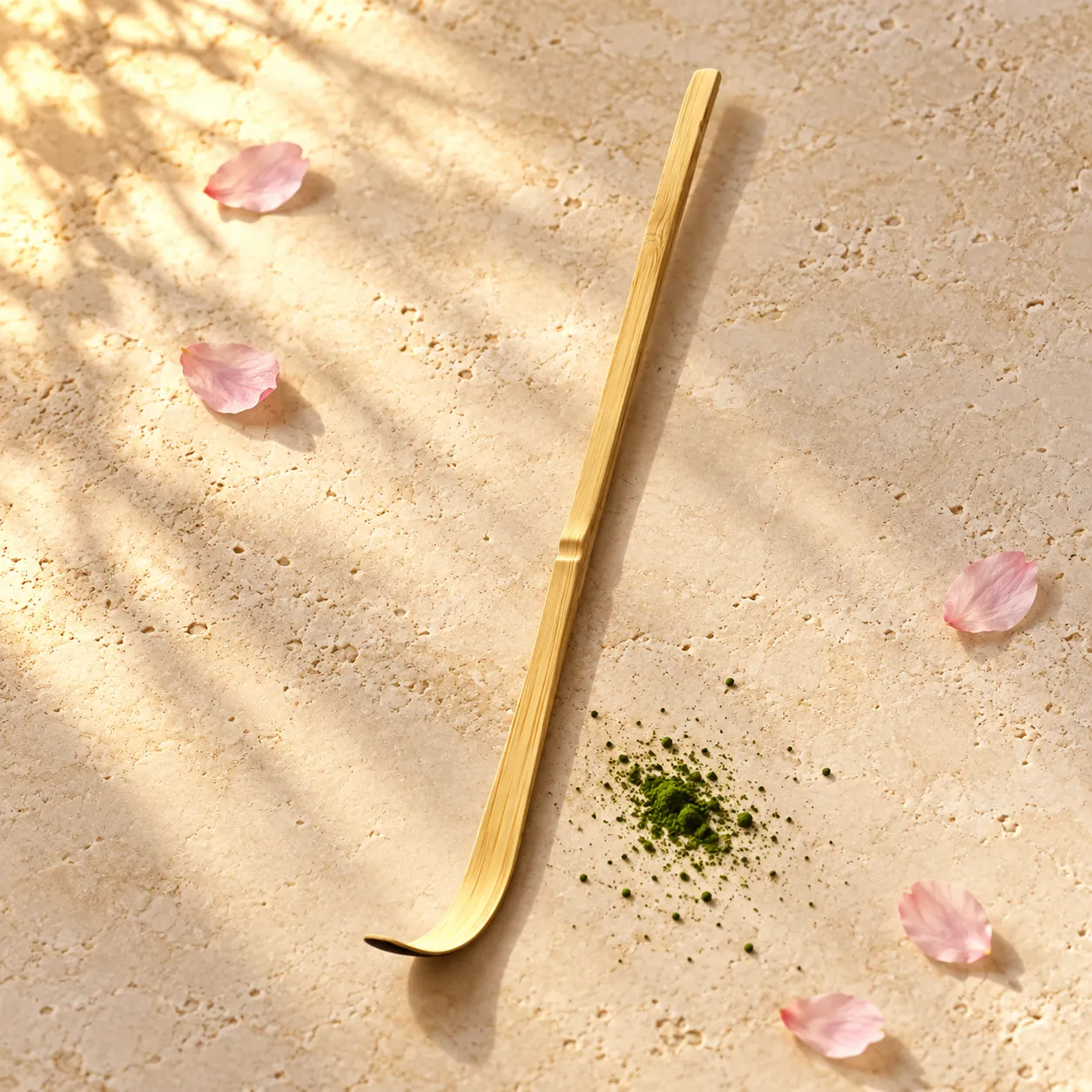
The useful unit is the serving, not the tin. Two grams is a standard portion: one heaped chashaku, or a level half-teaspoon. A 40 g tin holds twenty of them.
| Matcha | Price | Per 2 g serving | Per kg |
|---|---|---|---|
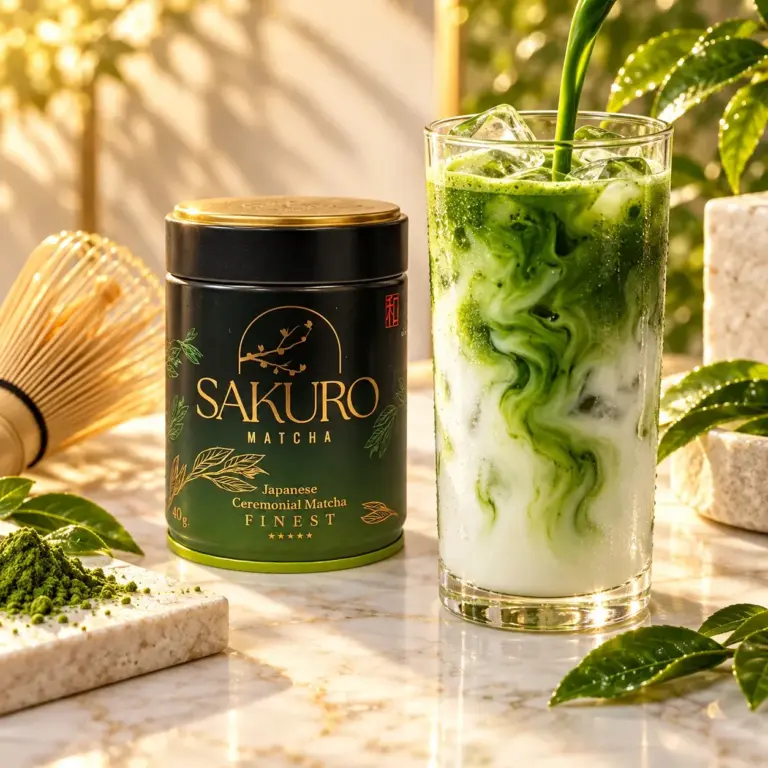
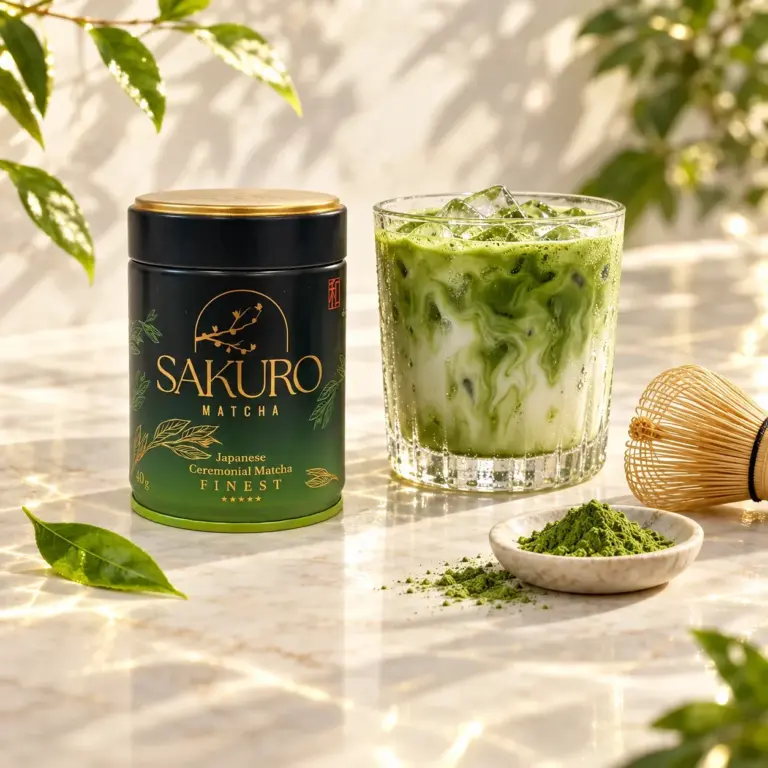
| Sakuro Matcha Finest 40 g, retail | 23.90 € | 1.20 € | 597.50 € |
| Sakuro Matcha Excellence 40 g, retail | 26.90 € | 1.35 € | 672.50 € |
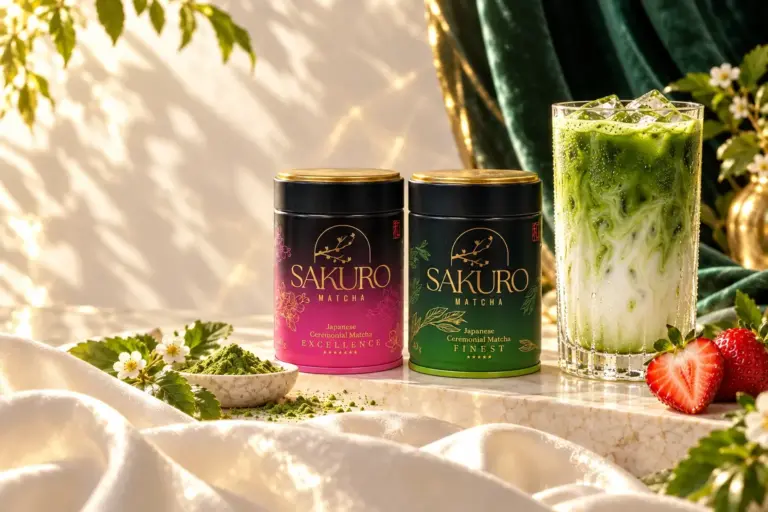
| Finest 40 g + Excellence 40 g, retail | 46.90 € | 1.17 € | 586.25 € |
| Finest, 1 kg wholesale bag (net) | approx. 108.90 €/kg | approx. 0.22 € | approx. 108.90 € |
| Excellence, 1 kg wholesale bag (net) | approx. 156.60 €/kg | approx. 0.31 € | approx. 156.60 € |
Retail prices are from yerbador.com on 13 November 2026. The wholesale figures are an indicative conversion of our Polish catalogue prices (480 and 690 zloty per kilo net) at the National Bank of Poland rate of 13 November 2026; the binding quote comes from Ewelina, and the rate moves.
Two things follow. First, a home drinker spending 1.20 euro a serving is paying less than half what a cafe charges for a matcha latte in most of Europe, and the gap widened this year. Second, the step from a 40 g tin to a 1 kg bag cuts the cost per serving by roughly a factor of five. That is not a loyalty discount, it is tin-and-label economics.
If you run a cafe: hold the margin, not the recipe
The instinct when raw material jumps is to cut the dose. Don’t. A matcha latte built on 1.5 g instead of 2 g tastes thin and milky, customers notice within a fortnight, and you have traded a few cents for the drink’s reason to exist.
Do the arithmetic on the real unit instead. At roughly 0.22 euro of Finest per 2 g serving, matcha is not the expensive part of your latte — the milk and the cup usually cost more. A 4.50 euro iced matcha with oat drink still leaves a wide margin after the tea. If matcha has become the item you worry about, the problem is more likely to be the 40 g retail tins behind the bar than the price in Japan.
We ship from Poland, inside the EU, in 1 kg bags: 3 kg takes 5% off, 5 kg takes 10%. Both grades are Japanese ceremonial matcha from Shizuoka — Finest for milk drinks and baking volume, Excellence where it is whisked and served neat.
For wholesale, one contact only: Ewelina, [email protected], +48 515 025 329. Tell her your monthly volume and what you serve, and she will send a binding quote.
How to buy matcha well in a tight market
A market this tight attracts padding. Four checks, all of which take seconds:
- Country, not just a Japanese-looking name. China and several Southeast Asian countries now grow matcha, and some of it is sold in packaging that implies Japan without ever saying it. Look for the prefecture or at least the country on the label. Ours is Japanese, from Shizuoka.
- Grade words mean nothing on their own. "Ceremonial" is not a protected term and no authority certifies it. Colour, smell and the finish in the cup do the work: bright jade rather than olive, a sweet grassy nose, no dusty bitterness at the end.
- Date on the tin. Matcha fades. Buy a size you will finish in a month or two, keep it closed, cold and dark, and never store it above the hob.
- A price far below the market. With tencha at the levels above, a cheap 100 g pouch of "ceremonial" matcha is either culinary grade, old, or not from Japan. One of the three, reliably.
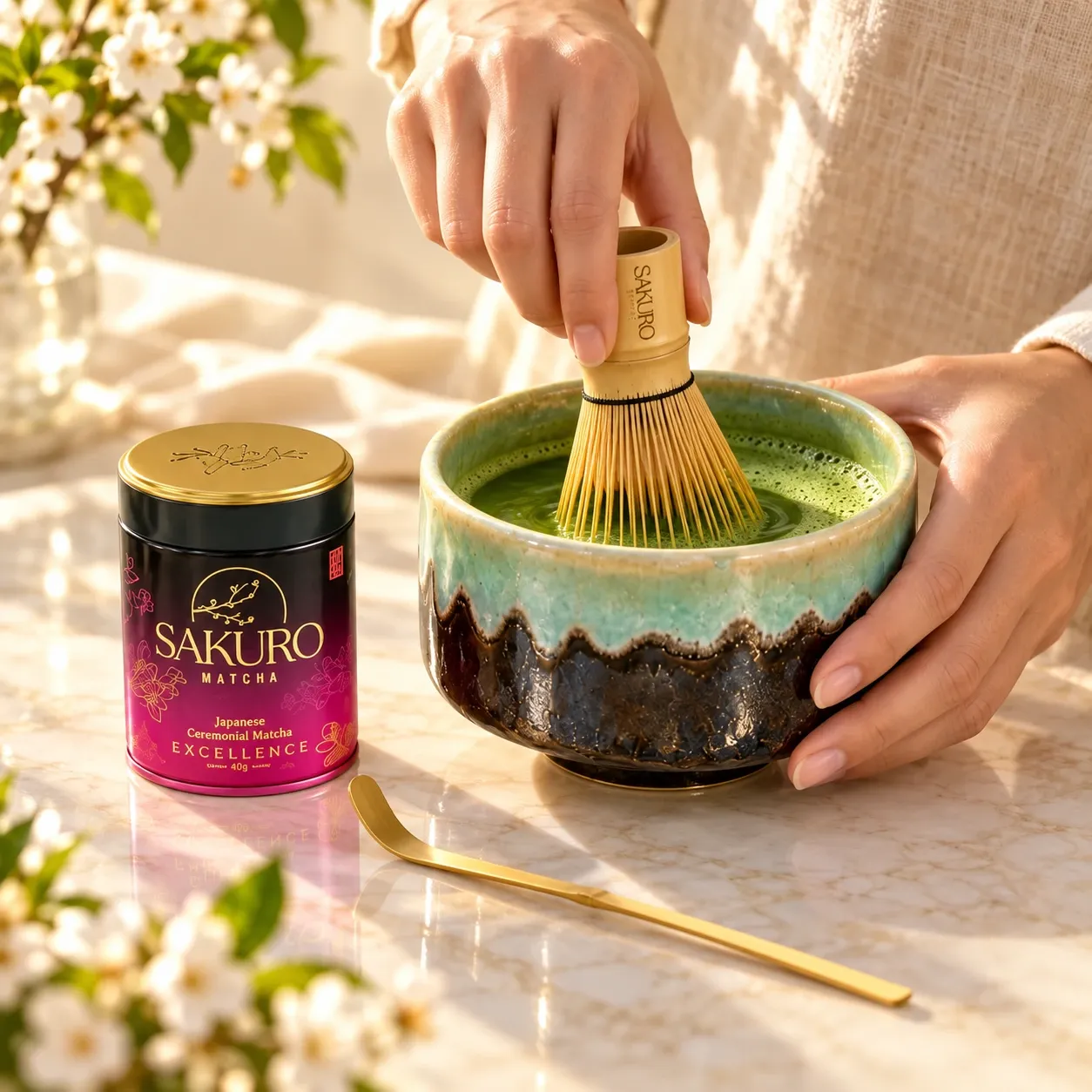
And if you want the tea to taste like the money you spent on it: sift it, use water at 70–80 °C, and whisk with a bamboo chasen (14.90 €) rather than a spoon. Lumps and scalding water waste more matcha than any price rise.
FAQ
Is there really a matcha shortage in 2026?
Not in the sense of empty warehouses. Japan produced 6,278 tonnes of tencha in 2025, nearly 18% more than in 2024, and the Kyoto first auction received fifteen times more leaf than a year earlier. The shortage is at the top of the quality range, where export demand nearly doubled in a year. That is why prices rose even as volume grew.
Why is ceremonial matcha so much more expensive than culinary?
Because it competes for the same leaf as the record bids. The gap between the cheapest and dearest lot at the May 2026 Kyoto auction was 7,200 against 40,021 yen a kilo. Culinary grade comes from later harvests and coarser leaf, which is why it holds up in baking but tastes harsh whisked in water.
Will matcha prices fall again?
Nobody serious will promise a date. What is known: new tencha fields need about five years to come into production, plantings and conversions increased in 2025, and Japan’s agriculture ministry has been encouraging the switch since April 2025. That points to more supply towards the end of the decade, not next spring. Japan’s overall tea area is still shrinking, which works the other way.
Does buying wholesale actually help?
Yes, and by more than most people expect. Our 1 kg bag works out at roughly 0.22 euro per 2 g serving for Finest, against 1.20 euro from a 40 g retail tin. Packaging, not tea, explains most of that difference. It only makes sense if you will get through it: a kilo is 500 servings, so it suits a cafe, an office or a baker rather than one household.
How much matcha does a cafe go through?
Rule of thumb: 2 g a drink, so a kilo is 500 drinks. Twenty matcha drinks a day is a kilo every 25 days. Order in that rhythm rather than stockpiling — matcha loses colour and sweetness within weeks of opening, and a bargain that sits in the storeroom is not a bargain.
Discover our TOP products!


Your dream figure

Discover new flavors
Yerba mate with tea

Accessories
Superfoods










Certified raw honeys from Poland

Check the current price
free shipping
Up to 90 days
free returns
24 H
shipping