
How much caffeine is in matcha? Per gram, per serving and vs coffee
2026-11-12
Ask three shops how much caffeine is in matcha and you get three confident answers: less than coffee, more than coffee, about the same as green tea. All three are wrong often enough to be useless, and for one simple reason — matcha is a powder, so the dose is yours. A barista’s half-hearted scoop and a properly measured bowl are not the same drink.
Published measurements put matcha powder at 18.9–44.4 mg of caffeine per gram (Kochman et al., Molecules 2021;26(1):85). That is the whole answer; everything below is arithmetic, plus the part about where the number actually matters — your afternoon and your sleep.
The short answer, in milligrams
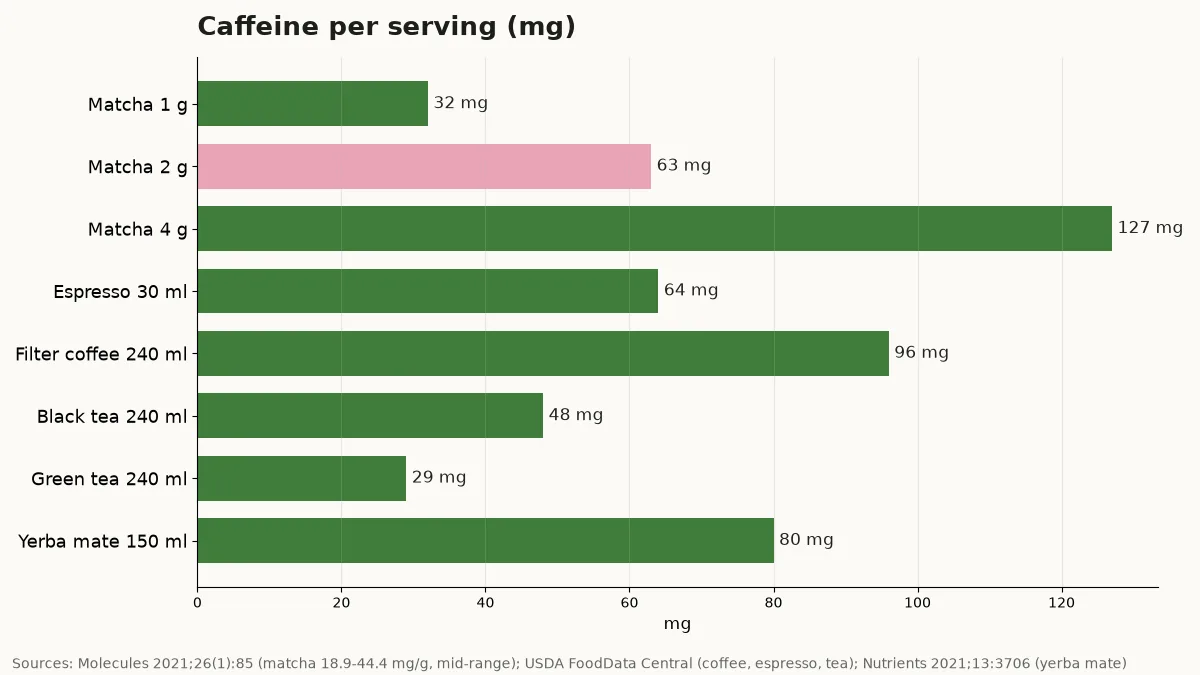
A standard bowl of matcha is 2 g of powder. Using the published range, that bowl carries 38–89 mg of caffeine, with the middle of the range landing near 63 mg. A single espresso sits at about 64 mg. So the honest headline is: a normal serving of matcha is roughly an espresso.
Scale it up or down and the picture changes fast:
- 1 g — a light iced latte, or matcha for someone who wants the taste and not much else: 19–44 mg
- 2 g — the standard bowl (usucha) and the usual café latte: 38–89 mg
- 4 g — koicha, the thick ceremonial preparation: 76–178 mg
The spread is wide because cultivar, harvest and grade differ between tins, and because no two laboratories sample the same powder. Treat any single number you see online — including the mid-range figures in the chart below — as a working estimate, not a label value.
Why a bowl of matcha is not a cup of green tea
Brewed green tea and matcha come from the same plant and behave completely differently in the cup. With leaf tea you pour hot water over the leaves, wait, and throw the leaves away. Whatever caffeine stayed in the leaf never reaches you. Brewed green tea comes out at about 12 mg per 100 ml, which is roughly 29 mg in a 240 ml mug (USDA FoodData Central).
With matcha you drink the leaf. The whole stone-ground powder goes into the bowl and stays there as a suspension — there is nothing to strain out and nothing left behind. That is why 2 g of matcha delivers two or three times what a mug of brewed green tea does, even though both are green tea.
It also means steeping tricks do nothing here. Hotter water, longer whisking, a finer chasen — none of it changes the caffeine, because there is no extraction step to tune. Water temperature changes how the tea tastes, not what it carries. The only lever you have is the scoop.
Matcha next to espresso, coffee, tea and mate
Comparisons only work per serving, because nobody drinks 100 ml of espresso and nobody drinks 2 g of filter coffee. Here are the servings people actually order.
| Drink | Serving | Caffeine | Source |
|---|---|---|---|
| Matcha, light | 1 g | 19–44 mg | Molecules 2021 |
| Matcha, standard bowl or latte | 2 g | 38–89 mg | Molecules 2021 |
| Matcha, koicha (thick) | 4 g | 76–178 mg | Molecules 2021 |
| Espresso | 30 ml | ~64 mg | USDA FoodData Central |
| Filter coffee | 240 ml | ~96 mg | USDA FoodData Central |
| Black tea, brewed | 240 ml | ~48 mg | USDA FoodData Central |
| Green tea, brewed | 240 ml | ~29 mg | USDA FoodData Central |
| Yerba mate | 150 ml | ~80 mg | Nutrients 2021;13:3706 |
Coffee figures come from USDA FoodData Central: espresso measures 212 mg per 100 ml, brewed coffee 40 mg per 100 ml. The mate figure is the per-cup value reported in Nutrients 2021;13:3706, which also notes that refilling the same gourd through a morning can push a session past 260 mg.
Dose it on purpose: 1 g, 2 g, 3 g, 4 g
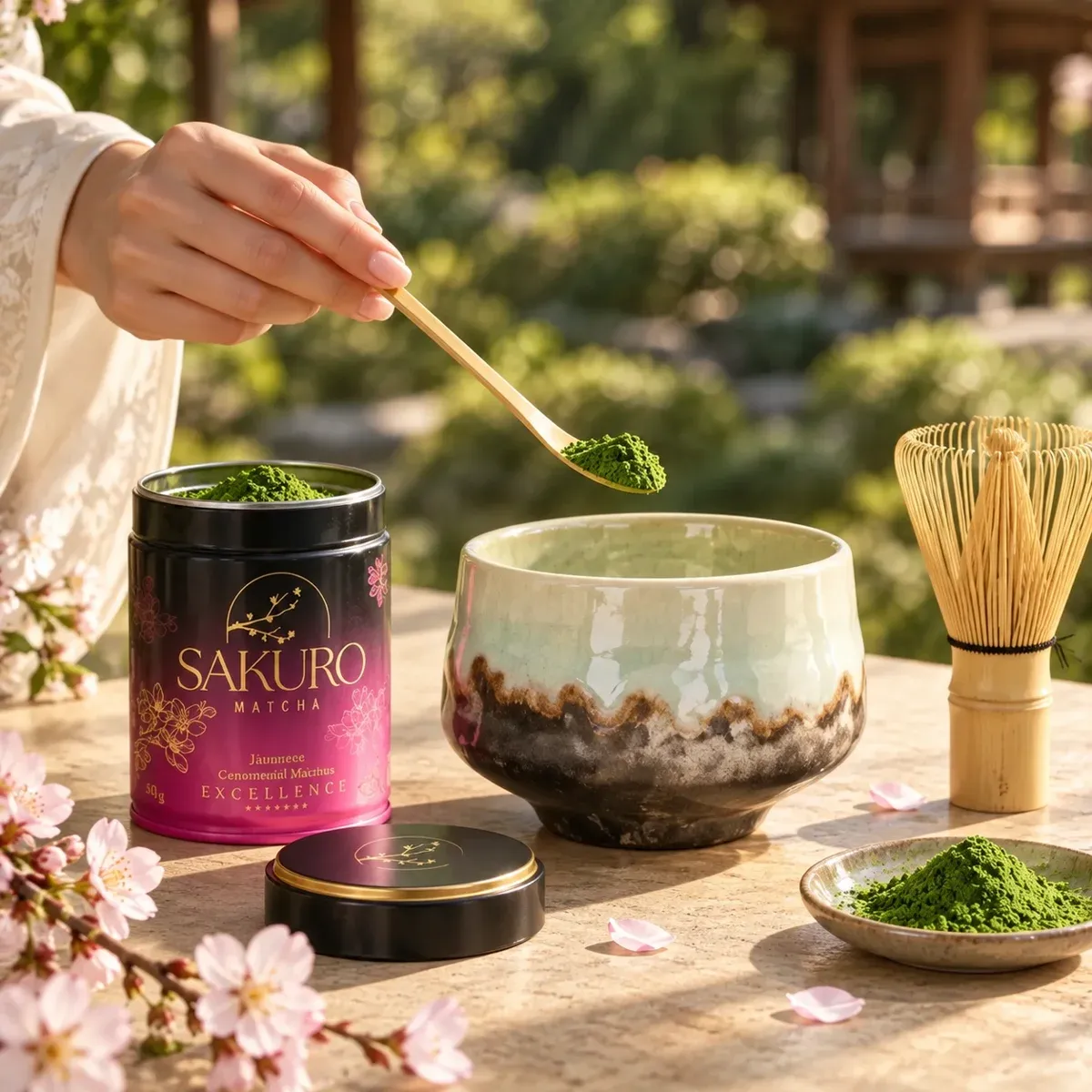
This is the part most people skip. A bathroom scale is useless here, but a €10 kitchen scale that reads to 0.1 g settles the question in a week — weigh your scoop three times and you will never need the scale again. A heaped bamboo chashaku holds roughly 1 g; a level half-teaspoon is close to the same.
| Dose | Drink | Caffeine (mid-range) | Servings per 40 g tin | Cost per serving, Finest | Cost per serving, Excellence |
|---|---|---|---|---|---|
| 1 g | Light iced latte | ~32 mg | 40 | €0.60 | €0.67 |
| 2 g | Standard bowl or latte | ~63 mg | 20 | €1.20 | €1.35 |
| 3 g | Strong latte, 400 ml glass | ~95 mg | 13 | €1.79 | €2.02 |
| 4 g | Koicha | ~127 mg | 10 | €2.39 | €2.69 |
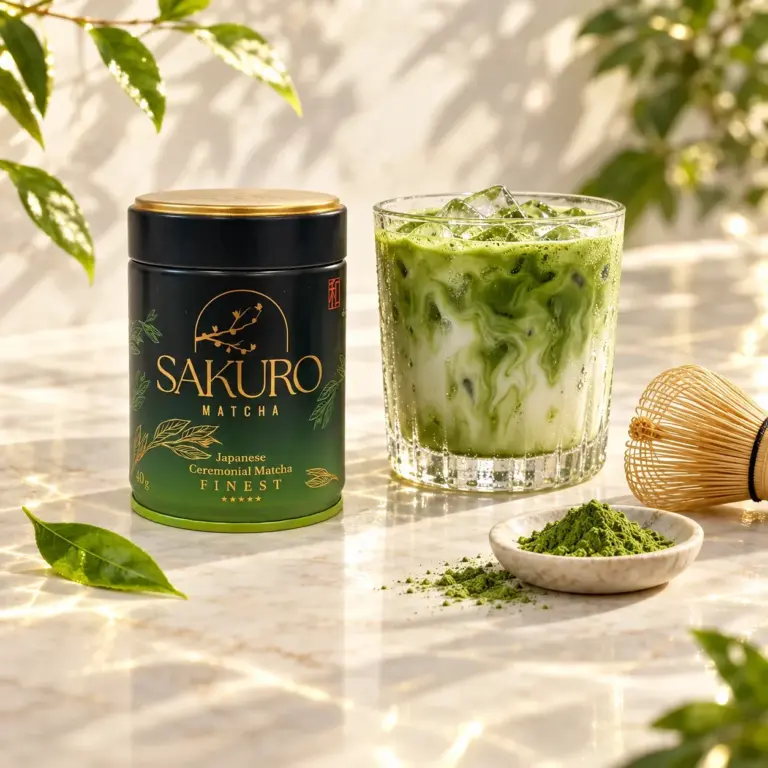
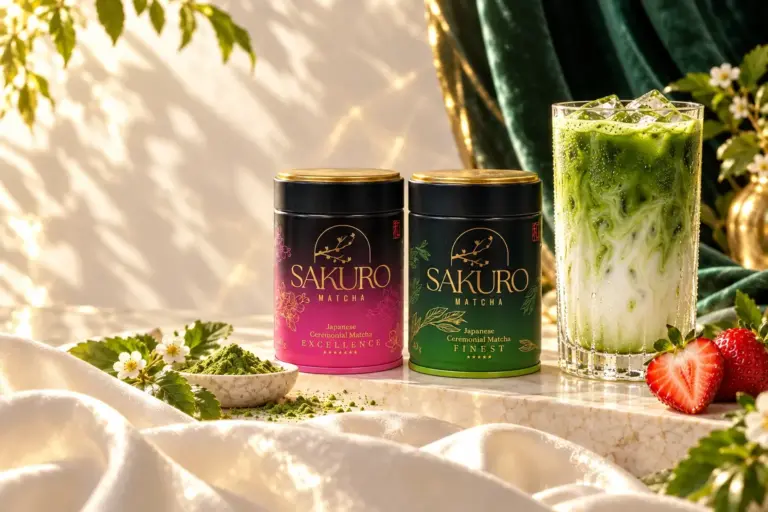
Prices are today’s shop prices for a 40 g tin: Sakuro Matcha Finest — €23.90 and Sakuro Matcha Excellence — €26.90. Both are Japanese ceremonial matcha from Shizuoka; Excellence is the softer, sweeter of the two, Finest the everyday workhorse that still whisks clean. If you drink matcha daily, the 2+1 pack — three Finest tins for €46.90 brings a 2 g serving down to about €0.78. A bamboo chasen costs €14.90 and is the difference between a smooth bowl and green specks.
Running a café and buying by the kilo? Wholesale matcha ships from Poland in 1 kg bags — roughly €109/kg for Finest and €157/kg for Excellence net, which is about €0.22 and €0.31 per 2 g serving (converted at the NBP rate of 4.4018 PLN/EUR on 12 November 2026; indicative only). Binding quotes come from Ewelina: [email protected], +48 515 025 329.
L-theanine: the other half of the leaf
Caffeine is not the only thing you swallow when you drink the powder. Matcha also carries L-theanine, an amino acid that shaded tea plants accumulate in the leaf; the same review reports measurements as high as 44.65 mg per gram in matcha samples, against 6.1 mg per litre in a brewed matcha infusion — again, the difference between drinking the leaf and drinking water that touched it.
What L-theanine demonstrably does is taste. It is the savoury, broth-like sweetness that makes good ceremonial matcha taste round rather than bitter, and it is why the leaves are shaded for weeks before harvest. Research into how theanine and caffeine behave together is ongoing and we are not going to tell you what it will do to your attention span. If anyone sells you matcha on a promise about focus, they are ahead of the evidence.
How much is too much
EFSA, the EU food safety agency, has published figures worth knowing (EFSA on caffeine):
- 400 mg a day from all sources does not raise safety concerns for healthy adults — that is roughly six 2 g bowls of matcha, or four mugs of filter coffee
- 200 mg in one go is the single-dose figure for healthy adults, about 3 mg per kg of body weight
- 200 mg a day is the figure for pregnant and breastfeeding women, from all sources combined
- 100 mg — roughly a 3 g matcha — may already affect sleep in some adults, particularly close to bedtime
That last line is the practical one. If matcha is keeping you up, you do not have to give it up; you can move it earlier or drop from 3 g to 1.5 g. Caffeine from a tin you measure is far easier to steer than caffeine from a café cup you do not.
FAQ
Does matcha have more caffeine than coffee?
Gram for gram, yes, and not by a little: the same review puts coffee beans at 10–12 mg of caffeine per gram against matcha’s 18.9–44.4 mg/g. Cup for cup, usually no — a filter coffee uses around 10 g of ground coffee and a bowl of matcha uses 2 g of powder, which is why the mug wins at about 96 mg to 63 mg.
How much caffeine is in a café matcha latte?
Nobody can tell you without knowing their scoop. Cafés serve anywhere from 1 g to 3 g, so the same drink can be 32 mg or 95 mg depending on who made it. If it matters to you, ask how many grams go in — a good café knows.
Is matcha safe during pregnancy?
EFSA’s figure for pregnancy is 200 mg of caffeine a day from all sources, which a 2 g matcha would not come close to on its own. But matcha is rarely the only caffeine in a day, and pregnancy advice belongs with your doctor or midwife, not a tea shop.
Will matcha keep me awake?
It can. EFSA notes that single doses around 100 mg may affect sleep duration and patterns in some adults, especially close to bedtime, and a 3 g matcha is in that territory. Where your own cut-off sits is personal — late afternoon works for most people, mid-afternoon for some.
Does whisking longer or using hotter water pull out more caffeine?
No. Matcha is a suspension, not an infusion: the entire dose is in the bowl the moment the powder goes in. Water that is too hot will make the tea taste harsh, but it will not change a single milligram.
Discover our TOP products!

Your dream figure

Discover new flavors

Yerba mate with tea

Accessories
Superfoods


Certified raw honeys from Poland

Check the current price
free shipping
Up to 90 days
free returns
24 H
shipping