
Matcha latte recipe: hot, iced and with oat milk
2026-11-12
A café turns out a matcha latte in ninety seconds. Scoop, whisk, steam, pour. At home the same drink falls apart in one of three places: the water was boiling, the powder was never sifted, or the matcha went straight into cold milk and sat there in green specks. Fix those three and this matcha latte recipe takes less time than waiting for the kettle to cool.
Below: the hot version, the iced one people order all summer, a milk-by-milk calorie table, and what a cup costs at home.
The base decides everything: 2 g, 60 ml, no lumps
A matcha latte is two drinks stacked on top of each other. Underneath sits a concentrated shot of whisked matcha; above it, milk. Get the shot right and the milk can be almost anything you like. Get it wrong and no amount of oat foam will cover for it.
For one glass you need:
- 2 g matcha — one heaped bamboo scoop, or a level half-teaspoon
- 60 ml water at 70–80 °C
- 200 ml milk, hot or cold
- optional: 5–10 ml honey, maple syrup or vanilla syrup
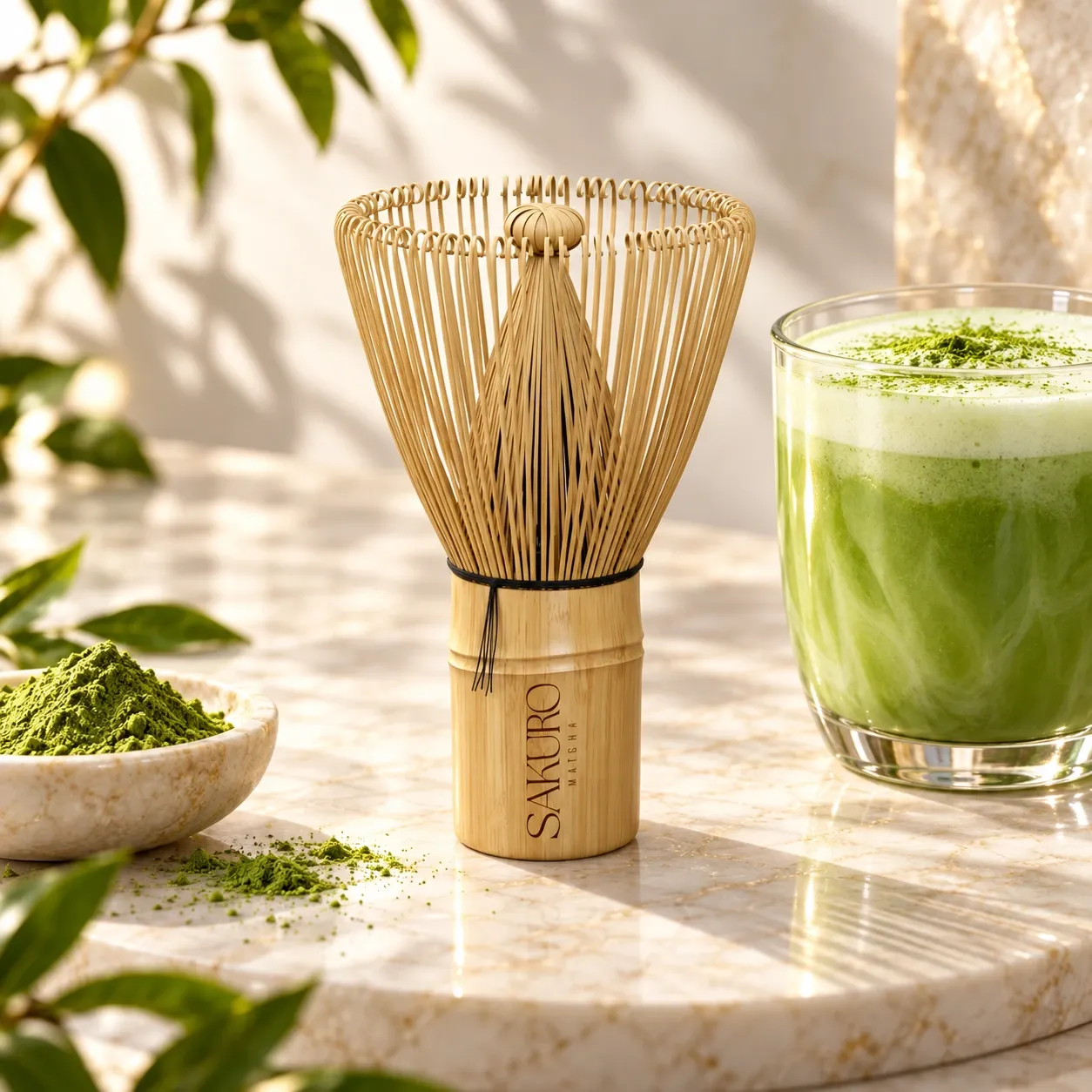
A bamboo whisk — a chasen — is still the fastest tool for this: its eighty-odd tines break up clumps that a teaspoon only pushes around the cup. An electric frother does the job. So does a jar with a tight lid: matcha, water, twenty seconds of shaking. A teaspoon on its own does not, and that is where most disappointing matcha comes from.
Two details do most of the work. Sift the powder. Matcha is stone-ground to a few microns and cakes in the tin the way cocoa does; a fine tea strainer and the back of a spoon turn it back into dust, and dust dissolves. Watch the water. Boiling water scorches the leaf and drags out the harsh, drying end of the flavour. Take the kettle off the boil and give it two minutes, or pour through a cold cup first — that alone drops it to roughly the right range.
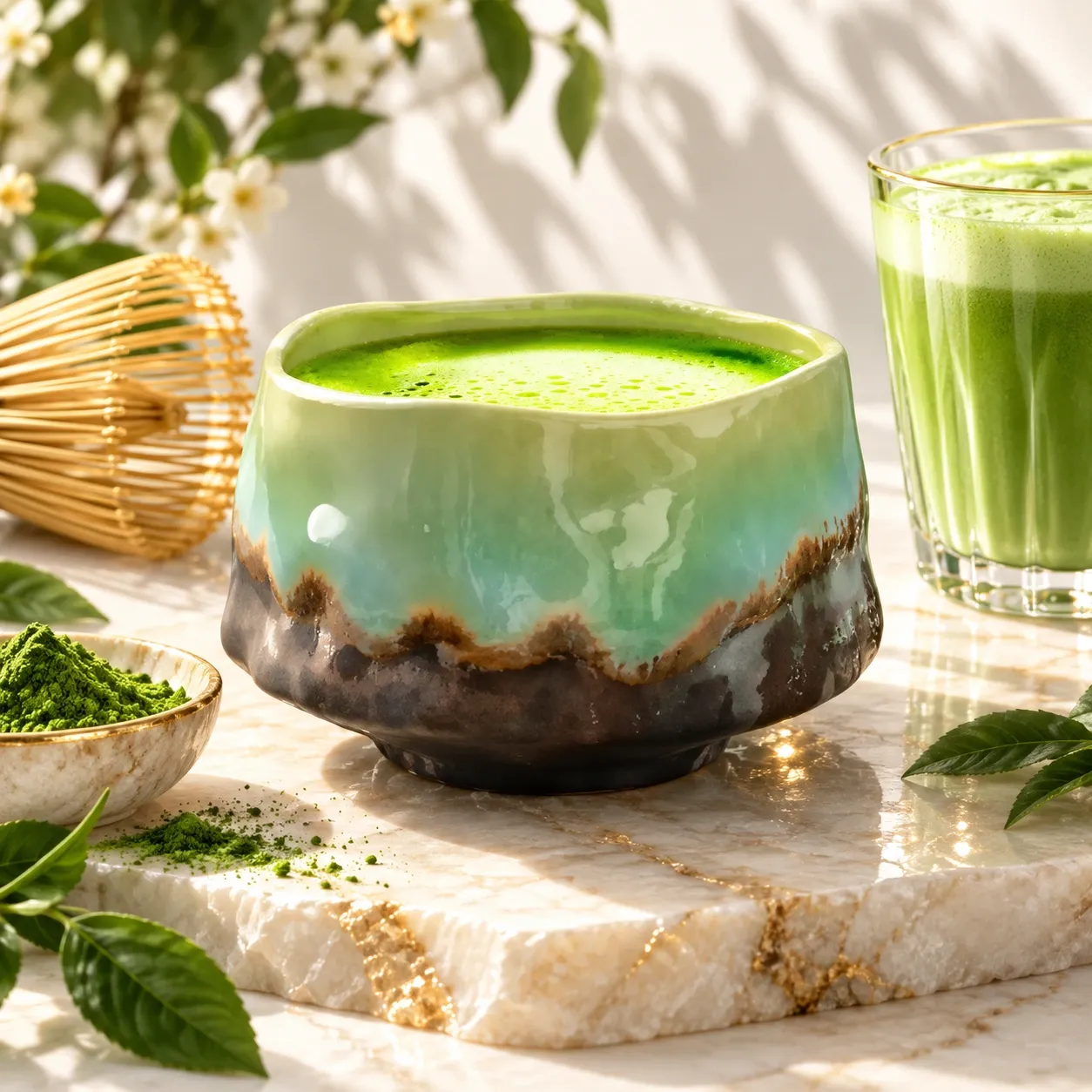
Whisk in a W or M shape, from the wrist, about fifteen seconds, then one slow circle to gather the foam in the middle. Keep the whisk off the bottom of the bowl. You are aerating, not scrubbing.
Hot matcha latte — the recipe
Serves 1 · 5 minutes · roughly 260 ml
Ingredients: 2 g matcha · 60 ml water at 70–80 °C · 200 ml milk · 5–10 ml syrup or honey, if you take it sweet.
- Sift the 2 g of matcha into a bowl or a wide cup.
- Add about 20 ml of the water and work it into a smooth paste with the whisk — ten seconds. This step is why your drink has no lumps.
- Add the remaining 40 ml and whisk fast for 15–20 seconds until a fine foam covers the surface.
- Heat the milk to 60–65 °C — hot to the lip, not steaming hard. Froth it if you have a frother; milk hotter than about 70 °C starts to taste cooked and flat.
- Pour the milk into a glass, add the sweetener if you are using it, then pour the matcha base through the foam. Pour slowly and it keeps the two-tone look for a minute or so.
Want the matcha stronger through the milk? Do not add water — use less milk. 150 ml instead of 200 ml sharpens the tea and keeps the texture.
Iced matcha latte — the recipe
Serves 1 · 4 minutes · a 350–400 ml glass
Ingredients: 2–3 g matcha · 40 ml water at 70–80 °C · 150 ml cold milk · 120–150 g ice.
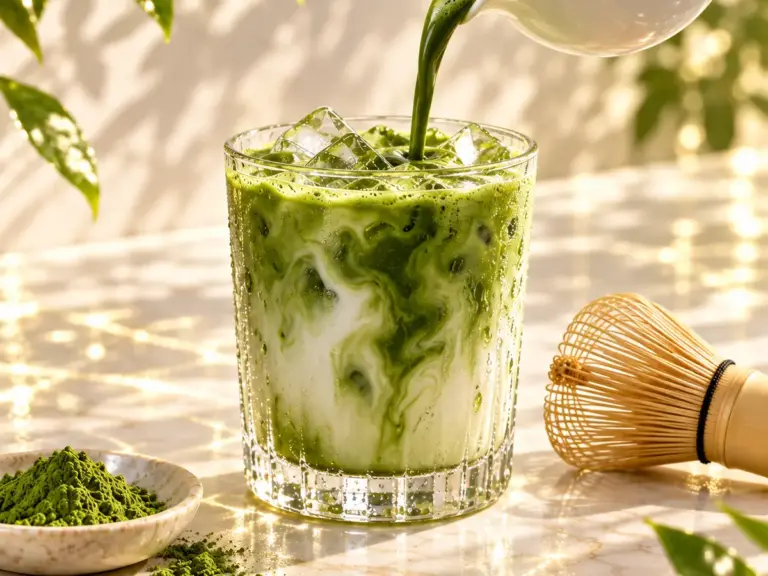
- Sift the matcha, add the 40 ml of hot water and whisk to a smooth, foamy shot. Warm water first — matcha simply will not dissolve in cold milk, and this is the single most common mistake in the iced version.
- Fill the glass with ice to about two-thirds.
- Pour in the cold milk, leaving a couple of centimetres at the top.
- Pour the matcha shot over the ice. Serve with a spoon or a straw — the layers look good for about thirty seconds and then it is a drink.
Ice dilutes. That is why the dose goes up to 3 g while the water drops to 40 ml: the shot has to survive the melt. Cafés do the same, which is why their iced matcha often tastes greener than the hot one.
Two variations worth knowing. Shake the shot with the milk and a few cubes in a jar and you get a cloudy, foamy drink closer to an iced shaken latte. Or skip the milk, top the shot with sparkling water and a slice of lemon, and you have a matcha tonic — dry, bitter, very good in August.
Which milk? Calories, protein and foam
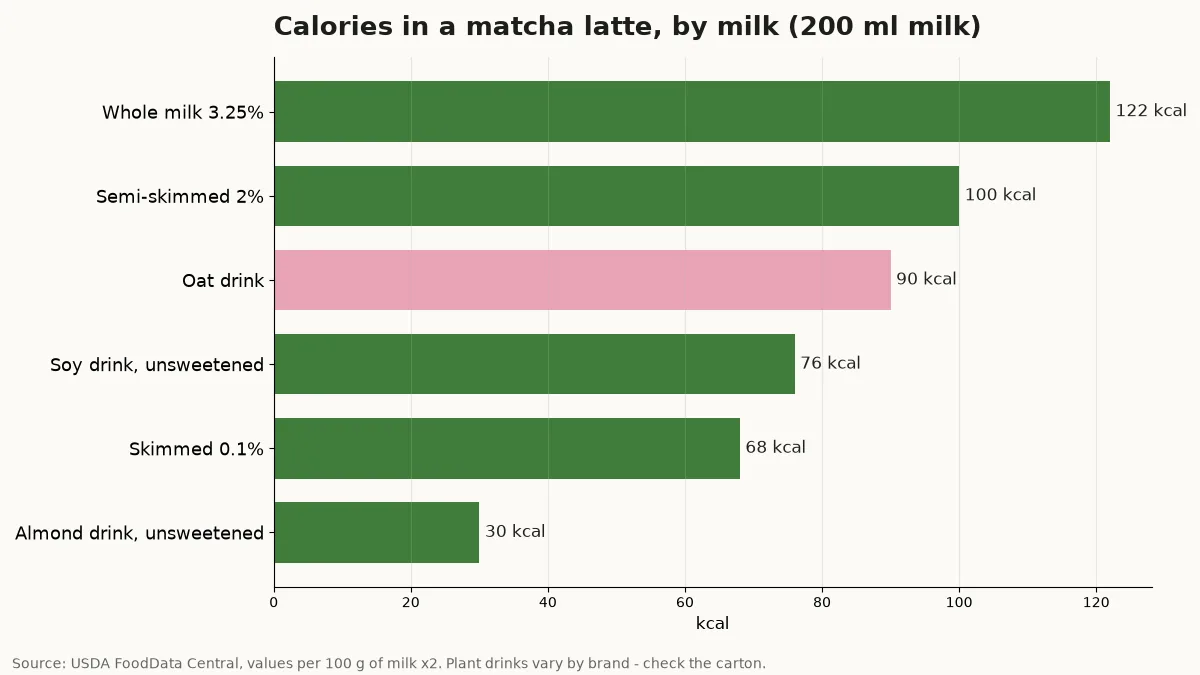
Matcha itself contributes almost nothing to the calorie count of this drink. The milk does, and so does anything you sweeten it with. The numbers below are for 100 ml of unsweetened milk, straight from the USDA FoodData Central database, with the figure for a latte built on 200 ml of it.
| Milk (100 ml) | kcal | Protein | In a latte (200 ml milk) | How it foams |
|---|---|---|---|---|
| Whole milk, 3.25% fat | 61 | 3.2 g | 122 kcal | Dense, glossy microfoam |
| Semi-skimmed, 2% fat | 50 | 3.4 g | 100 kcal | Lighter foam, holds well |
| Oat drink | 45 | 0.7 g | 90 kcal | Creamy; barista versions foam best |
| Soy drink, unsweetened | 38 | 3.6 g | 76 kcal | Stable foam, can split in acidic drinks |
| Skimmed, 0.1% fat | 34 | 3.4 g | 68 kcal | Big bubbles that collapse fast |
| Almond drink, unsweetened | 15 | 0.6 g | 30 kcal | Thin foam, watery body |
Plant drinks vary a lot between brands — a sweetened oat drink can carry twice the sugar of the unsweetened carton beside it, so the label is the only reliable source. Barista versions usually contain more fat, which is exactly why they foam.
On taste: oat is the default in specialty bars because its mild sweetness sits under matcha’s grassy edge. Whole dairy gives the roundest texture. Almond is lightest but leaves the matcha exposed, so you taste every flaw in the base.
Five things that make a matcha latte bitter
Boiling water. The biggest one, and the easiest to fix. 70–80 °C.
Too much powder. Three grams in 200 ml of milk is a strong drink; four is a chore. If you want more intensity, cut the milk instead.
Unsifted matcha. Clumps do not disappear — they sit on the bottom and release bitterness in the last two mouthfuls.
Old or badly stored matcha. It oxidises in light, heat and air. A tin left open on a sunny shelf since spring tastes hay-like however carefully you whisk it. Keep it closed, cool and dark, and finish an opened tin within a couple of months.
Culinary-grade powder in a drink. Culinary matcha is made to hold its flavour against sugar, butter and flour. In a glass of milk it reads as harsh. Ceremonial grade is the one for drinking.
One note on caffeine: matcha contains it, and because you drink the whole leaf rather than an infusion, a serving is not a trivial amount. EFSA considers intakes up to 400 mg of caffeine a day from all sources unproblematic for healthy adults, and up to 200 mg a day during pregnancy and breastfeeding. Count your matcha alongside your coffee rather than instead of it.
Where to buy the matcha, and what a cup costs
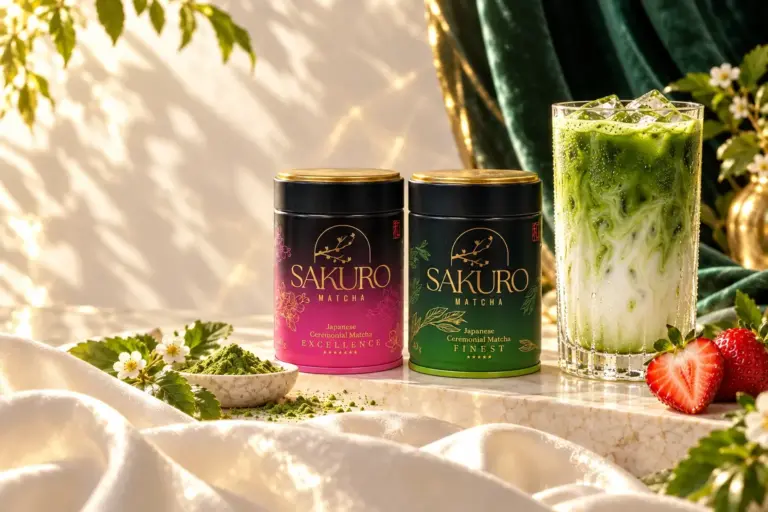
We import Japanese ceremonial matcha from Shizuoka and sell it under the Sakuro name, shipped from EU stock. Two grades, both for drinking:
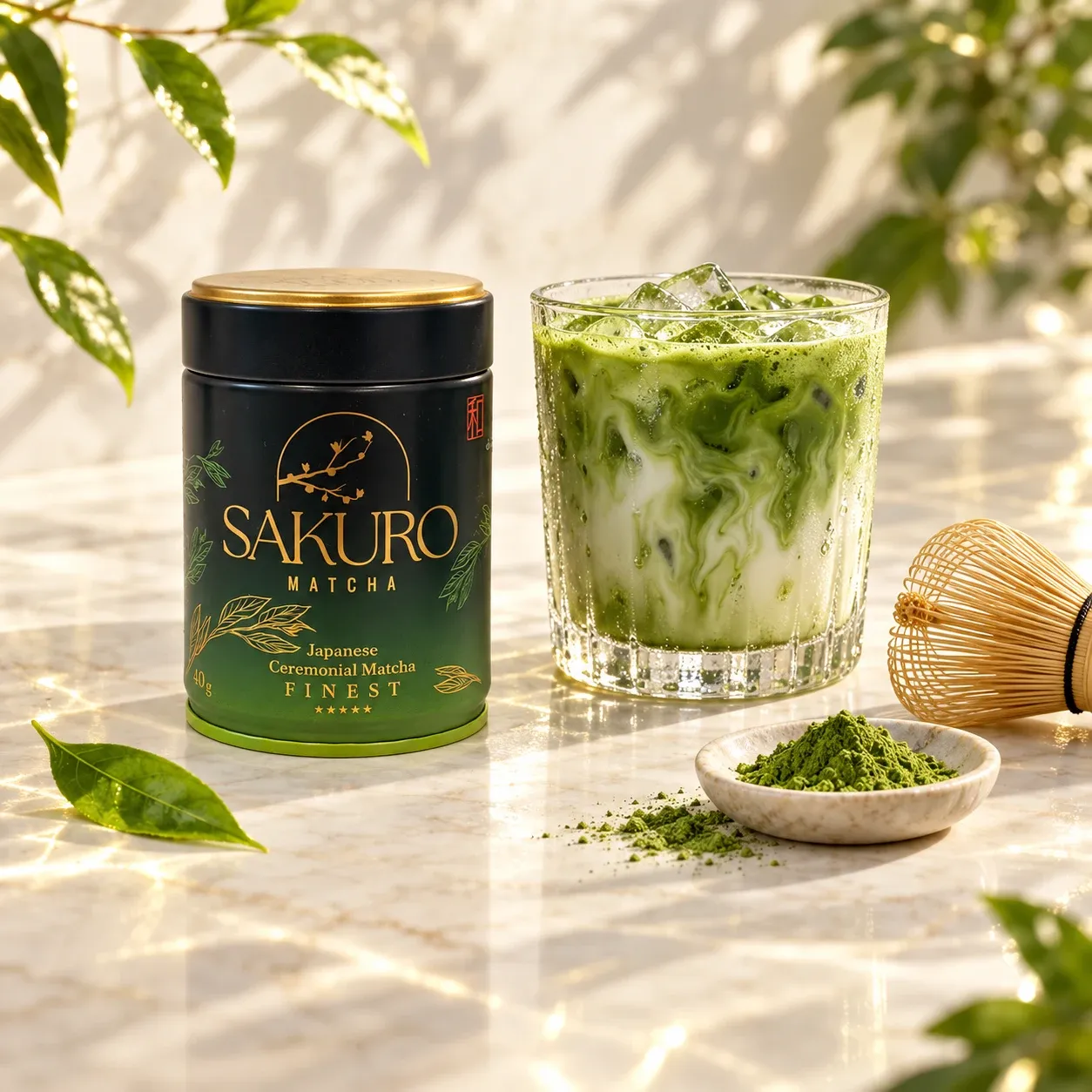
- Sakuro Matcha Finest, 40 g tin — €23.90. The everyday one. Enough body to come through 200 ml of milk, and it holds its colour over ice. This is the tin for lattes.
- Sakuro Matcha Excellence, 40 g tin — €26.90. Finer, sweeter, less astringent. Worth the extra when you drink matcha on its own from a bowl.
- Finest 40 g + Excellence 40 g — €46.90 if you want to taste the difference side by side.
- Chasen, bamboo matcha whisk — €14.90. The one tool that genuinely changes the result.
A 40 g tin holds twenty servings at 2 g: about €1.20 of matcha per glass with Finest, €1.35 with Excellence, plus milk. A café charges four to six euros for the same drink.
Running a café, a restaurant or an office kitchen and going through more than a tin a week? Matcha is sold by the kilogram too — Finest works out at roughly €109 per kg net, about €0.22 for a 2 g serving (our price list converted at the NBP rate of 4.3895 PLN/EUR on 10 November 2026; indicative conversion). Wholesale enquiries go to Ewelina: [email protected], +48 515 025 329.
Questions people ask about matcha lattes
Can I make a matcha latte without a bamboo whisk?
Yes. An electric milk frother gives nearly the same result, and a screw-top jar works surprisingly well — matcha, hot water, shake hard for twenty seconds, then pour. A teaspoon is the only method that reliably fails.
Why does my matcha taste bitter?
In order of likelihood: water too hot, powder not sifted, too much matcha for the milk, or culinary-grade powder in a drinking recipe. Drop the water to 70–80 °C first — that fixes most cases on its own.
How much matcha should I use per cup?
Two grams for a hot latte, two to three for an iced one because the ice dilutes it. That is one heaped chashaku scoop or a level half-teaspoon. Weigh it for the first week and your eye is calibrated after that.
Is matcha latte healthier than coffee?
It is a different drink, not a cure for anything. It contains caffeine, as coffee does, plus the amino acid L-theanine, which is why many people describe the effect as steadier. Both fit inside the EFSA guidance of 400 mg a day for healthy adults.
Can I make the matcha base in advance?
You can whisk a shot and keep it covered in the fridge for a few hours — useful on weekday mornings. It loses foam and some brightness, so shake it before pouring. Longer than a day and the colour goes olive, and the taste with it.
Discover our TOP products!

Your dream figure

Discover new flavors

Yerba mate with tea


Accessories


Superfoods



Certified raw honeys from Poland

Check the current price
free shipping
Up to 90 days
free returns
24 H
shipping