
Matcha wholesale for cafés and restaurants: what a kilo really costs
2026-11-12
Twenty matcha lattes a day is a kilo of matcha every five trading weeks. Forty a day and you open a new bag every two or three weeks. Somewhere around there, buying 40 g tins stops being a supply decision and turns into an expensive habit. That is where matcha wholesale starts: whole kilograms, one supplier inside the EU, and a cost per cup you can defend in front of your accountant.
What follows is the costing sheet we send to cafés, written out in full — what a kilogram of Japanese ceremonial matcha costs, what one serving works out at, how much of your menu price it takes, and how to place the order.
Matcha stopped being a trend drink and became a line on the rota
Five years ago matcha was the thing one barista on the team knew how to make. Now it is printed on the menu, it has an iced version for summer, and there is a regular who orders it at 8:10 every weekday. The demand side is settled.
The supply side is not. Japan’s tencha harvest — the shaded leaf that gets stone-ground into matcha — came under heavy pressure in 2024 and 2025, and prices followed. Ippodo, a Kyoto tea house founded in 1717, told its customers in an August 2025 notice that matcha prices in Kyoto Prefecture had reached roughly 2.7 times the previous year’s level, that it was limiting how much each customer could buy, and that it was raising prices across its whole range. Shops rationing matcha was not a marketing line. That is what the 2025 season looked like.
For a café this has two consequences. A supplier holding stock inside the EU is worth more than a slightly cheaper quote with a shipping date in Japan. And your cost per cup is no longer a rounding error you can leave until the annual review. Both are fixable in an afternoon.
Two grades, two jobs behind the bar
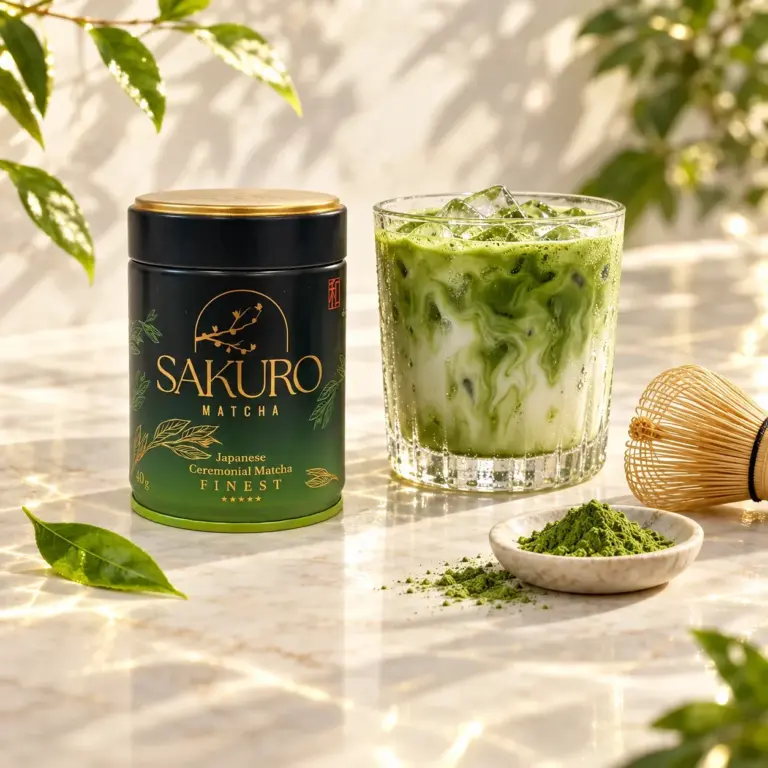
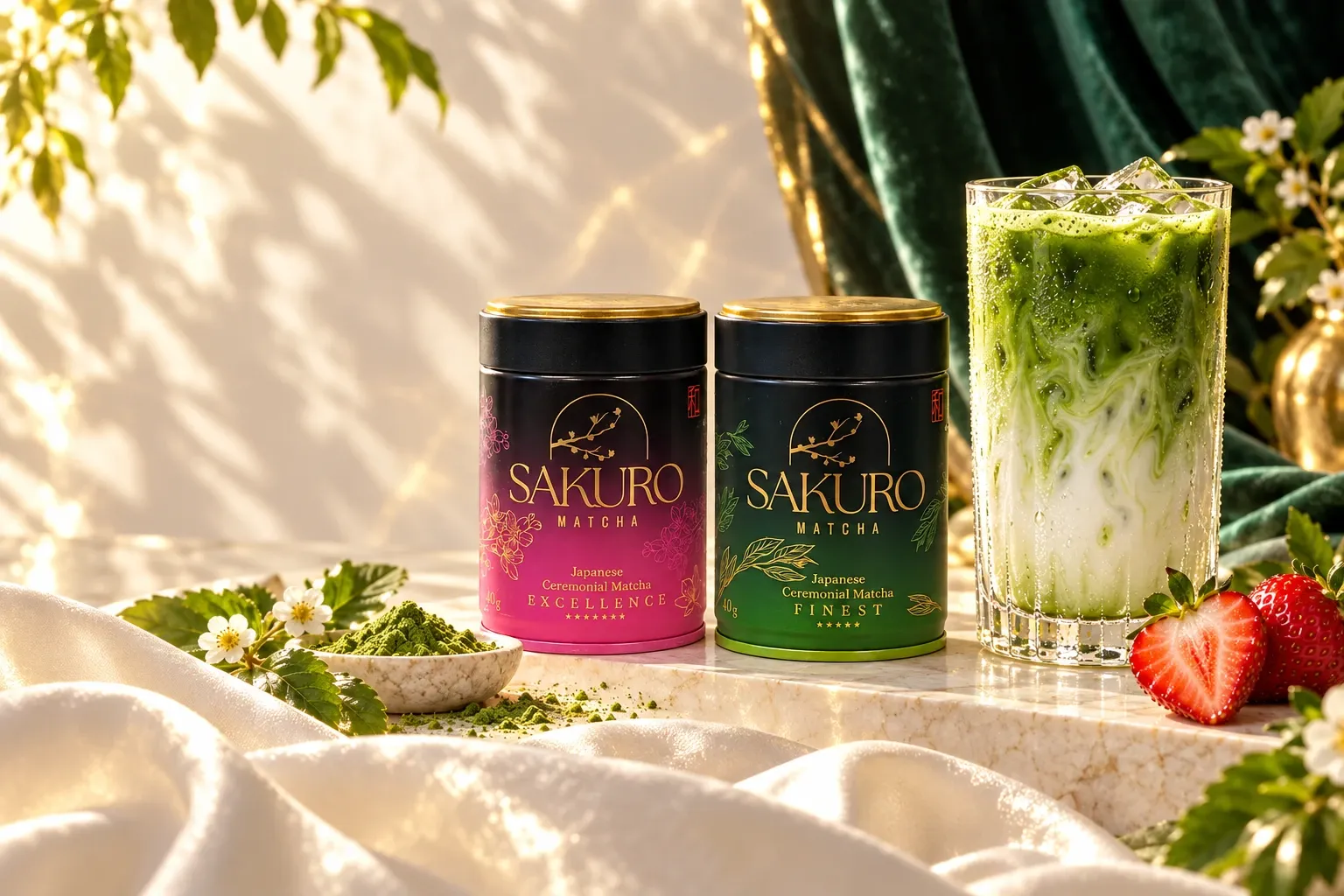
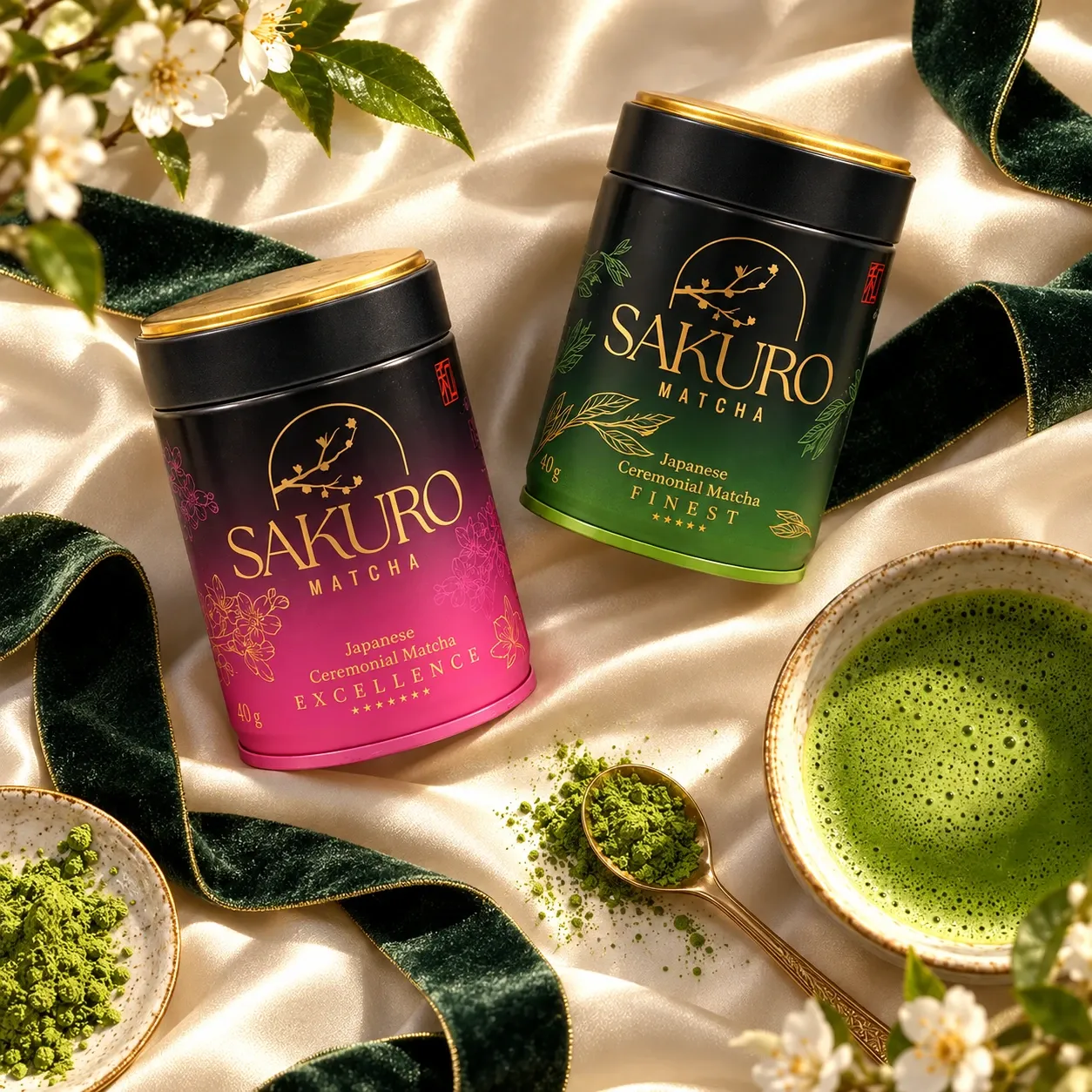
We sell two Japanese ceremonial matchas from Shizuoka under the Sakuro name, and they are not interchangeable.
Sakuro Matcha Finest is the workhorse. It has enough body to come through 200 ml of milk without turning into pale green water, and it holds its colour in a drink packed with ice. This is what most cafés should be pouring for lattes, iced matcha, matcha tonics and anything with syrup in it.
Sakuro Matcha Excellence is finer, sweeter, less astringent. It earns its extra nine cents a cup when the tea is served on its own: usucha whisked in a bowl, a short ceremonial serve, a tasting flight next to a single-origin filter. A guest who orders matcha straight will notice the difference. A guest who orders it with oat milk and vanilla syrup mostly will not.
Most cafés we work with end up with both — Finest in the working tin by the milk fridge, Excellence for bowl service and for staff training, where tasting a clean usucha teaches more about dose and water temperature than any video.
| Sakuro Matcha Finest | Sakuro Matcha Excellence | |
|---|---|---|
| Origin | Shizuoka, Japan | Shizuoka, Japan |
| Grade | Ceremonial | Ceremonial |
| Job on the bar | Lattes, iced matcha, tonics, baking | Straight usucha, bowl service, tasting flights |
| Standard dose | 2 g | 2 g |
| Wholesale, 1 kg (net) | approx. €109.35 / kg | approx. €157.19 / kg |
| Cost per 2 g serving | approx. €0.22 | approx. €0.31 |
| Retail tin, 40 g | €23.90 | €26.90 |
What one cup actually costs
The standard bar dose is 2 g, which gives 500 servings from a kilogram. Work the list price back to that unit and the numbers stop being abstract.
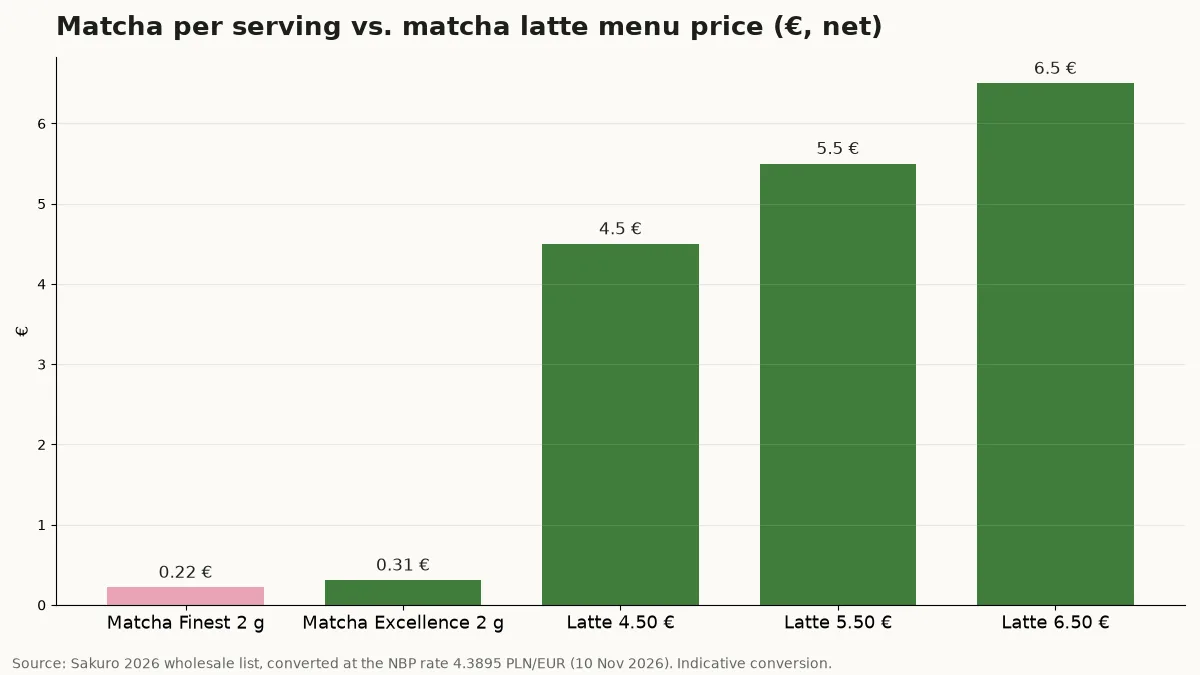
Our wholesale list is kept in Polish zloty and converted here at the National Bank of Poland rate of 4.3895 PLN/EUR from 10 November 2026. Treat the euro figures as indicative: the binding offer, in euro, comes from Ewelina.
| Order size | Finest, per kg (net) | Finest, per 2 g | Excellence, per kg (net) | Excellence, per 2 g |
|---|---|---|---|---|
| 1 kg | approx. €109.35 | approx. €0.22 | approx. €157.19 | approx. €0.31 |
| 3 kg (−5%) | approx. €103.88 | approx. €0.21 | approx. €149.33 | approx. €0.30 |
| 5 kg (−10%) | approx. €98.42 | approx. €0.20 | approx. €141.47 | approx. €0.28 |
Prices are net, per kilogram, in 1 kg bags, shipped from Poland within the EU.
Putting it on the menu without guessing
Here is the number that surprises most owners: the matcha itself is between three and seven per cent of what you charge for the drink.
| Menu price (net) | Finest, 2 g | Share of price | Excellence, 2 g | Share of price |
|---|---|---|---|---|
| €4.50 | €0.22 | 4.9% | €0.31 | 6.9% |
| €5.00 | €0.22 | 4.4% | €0.31 | 6.2% |
| €5.50 | €0.22 | 4.0% | €0.31 | 5.6% |
| €6.00 | €0.22 | 3.7% | €0.31 | 5.2% |
| €6.50 | €0.22 | 3.4% | €0.31 | 4.8% |
Everything else in the cup is where the margin is won or lost. Milk is almost always the biggest single cost in a matcha latte, and oat milk — which is what a large share of matcha drinkers ask for — costs more per litre than dairy in most European wholesale catalogues. The takeaway cup and lid is the second line. Then there is the ninety seconds of barista time, which is the same ninety seconds whether the drink sells for €4.50 or €6.50.
Two rules follow. Price the matcha latte at least level with your flat white, usually a little above, because it takes longer to make and the raw material is not cheap. And charge properly for the iced version: 400 ml means more milk, more ice and a bigger cup, and many bars raise the dose to 3 g, which costs €0.33 in Finest rather than €0.22.
For your own numbers, take the matcha figure from the table, add your invoiced price for milk and packaging, and the rest is arithmetic you can do on the back of a docket.
How much to order, and how to order it
Count your matcha drinks across one normal week, multiply by four, and read off the row.
| Matcha drinks per day | Per month (26 days) | Matcha used at 2 g | Sensible order |
|---|---|---|---|
| 10 | 260 | 0.52 kg | 1 kg |
| 20 | 520 | 1.04 kg | 1–2 kg |
| 40 | 1,040 | 2.08 kg | 3 kg (−5%) |
| 80 | 2,080 | 4.16 kg | 5 kg (−10%) |
Order in whole kilograms; the bag is 1 kg. Three kilograms takes 5% off the list, five kilograms takes 10%. Shipping is from Poland, inside the EU.
Storage matters more with matcha than with coffee. Keep the bag sealed, cool, dark and away from anything aromatic, because matcha picks up smells. Decant a working quantity into a small airtight tin at the bar and refill it, rather than leaving a kilo bag open under the counter all shift. Matcha oxidises from the moment air reaches it, and a dull, brownish-green powder makes a dull, brownish-green latte however good the leaf was.
Wholesale contact
Wholesale orders go through one person, which keeps them quick: Ewelina.
- E-mail: [email protected]
- Phone: +48 515 025 329
Tell her three things — which grade, how many kilograms, which country you want it delivered to — and she will come back with the binding offer and the current euro price. If you are not sure about the grade, say what you sell most of and she will tell you what comparable cafés order.
Not ready for a kilogram? Start with tins
A two-week trial on retail tins is a sensible way in, and it costs far less than a bad decision about five kilos. A 40 g tin is 20 servings at 2 g: enough to run matcha as a special, watch how it sells and find out whether your team can whisk it without a lumpy first cup.
Prices from yerbador.com on the day this was published:
- Sakuro Matcha Finest 40 g — €23.90 — 20 servings, the grade for lattes.
- Sakuro Matcha Excellence 40 g — €26.90 — 20 servings, for bowl service and staff tasting.
- Sakuro Matcha 2+1 free, 3 × Finest 40 g — €46.90 — 60 servings, the cheapest way to run a proper trial.
- Chasen — bamboo matcha whisk — €14.90 — one per station. A milk frother is not a substitute.
When the tins run out faster than you planned, that is your answer on the kilogram.
Questions cafés ask before the first order
Is this ceremonial or culinary matcha?
Both Sakuro Finest and Sakuro Excellence are Japanese ceremonial-grade matcha from Shizuoka. We do not run a separate culinary line. In practice Finest is also what you would use for baking and blended drinks — it costs more than a culinary powder and it tastes like it.
How many drinks come out of one kilogram?
500 at the standard 2 g dose, 333 at 3 g. Most bars settle on 2 g for a 200–250 ml hot latte and 3 g for a 400 ml iced one.
What do I tell guests who ask about caffeine?
That matcha contains caffeine like any tea from Camellia sinensis, and that because you drink the whole leaf rather than an infusion, the amount per cup is higher than for the same weight of steeped tea. EFSA considers single doses up to 200 mg and daily intake up to 400 mg of caffeine safe for healthy adults; during pregnancy the figure is 200 mg a day from all sources. Put the dose per serving on your caffeine and allergen sheet, and keep health claims off the menu.
Do you ship outside Poland?
Yes. Orders go out from Poland to the rest of the EU, and Ewelina confirms the shipping cost for your country together with the offer.
Can I taste it before committing to kilograms?
Buy a 40 g tin at the retail price above, or write to Ewelina and ask. She will tell you what is possible for your order size rather than promise something we cannot deliver.
Discover our TOP products!
Your dream figure
Discover new flavors
Yerba mate with tea
Accessories
Superfoods



Certified raw honeys from Poland

Check the current price
free shipping
Up to 90 days
free returns
24 H
shipping