
Ginseng Powder – Properties, Dosage and How to Use It
2026-09-08
In short: Yerbador’s ginseng powder is 100% powdered Siberian ginseng root (Eleutherococcus senticosus), also known as eleuthero. It is botanically a different plant from true ginseng, i.e. Korean Panax ginseng, although both belong to the same family of adaptogens. A standard serving is 3 g of powder dissolved in 200 ml of water, juice, yoghurt or tea, and a 100 g pack lasts about a month of use. Below is the exact composition from the label, real numbers converted per serving, and who eleuthero is – and isn’t – suited for.
Siberian ginseng, i.e. eleuthero – how it differs from true ginseng
This is a misunderstanding that needs clearing up right away, because the trade name confuses more people than it should. Ginseng, which is most often talked about in the context of Asian adaptogens, is Panax ginseng – a plant from the Araliaceae family, grown mainly in Korea and China, valued for the ginsenosides in its root. Eleuthero (Eleutherococcus senticosus) is a different genus from the same botanical family, growing in Siberia, north-eastern China and Japan. It’s sometimes called “Siberian ginseng” for marketing reasons, since it works in a similar direction as an adaptogen, but it has a different composition of active compounds – eleutherosides instead of ginsenosides.
The difference isn’t nitpicking over words. Since it’s a different plant, you can’t attribute to it the effects studied specifically for Panax ginseng – that would be unfair to anyone reading the label and looking for reliable information. Eleuthero has had its own history of use for decades in the folk medicine of the Far East and Russia, mainly as a plant supporting immunity and the body’s endurance during periods of fatigue. More about the plant itself and its origin can be found on the Polish Wikipedia.
Our product is 100% powdered Siberian ginseng root (Eleutherococcus senticosus) – a single ingredient, with no fillers or additives. It’s a dietary supplement, not a medicine, and we treat it as such throughout this article.
Composition from the label and nutritional values per 100 g
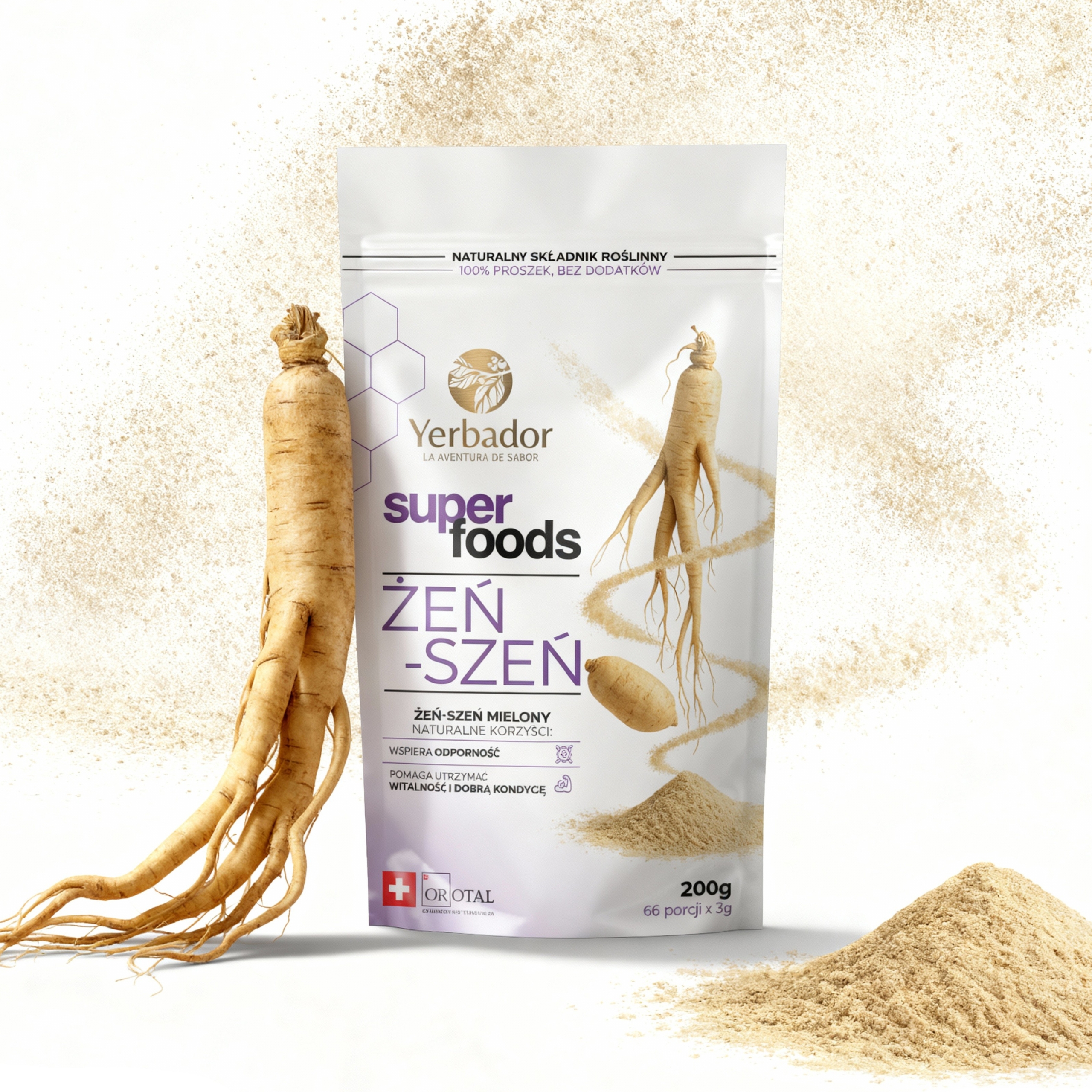
The composition is short, because it’s meant to be short: 100% powdered Siberian ginseng root. No maltodextrin, no flavouring, no filler. According to the product label, the nutritional values per 100 g of powder are as follows:
- Energy value: 1100 kJ / 270 kcal
- Fat: 1.20 g, of which saturated fatty acids: 0.30 g
- Carbohydrates: 60 g, of which sugars: 20 g
- Fibre: 3.50 g
- Protein: 10 g
- Salt: 0.05 g
These figures apply to 100 g of powder, while a standard serving is 3 g, roughly a level teaspoon. Converted per serving, that’s not much: about 8 kcal, 0.04 g of fat, just under 2 g of carbohydrates and trace amounts of fibre and protein. There’s no point pretending that a teaspoon of eleuthero is a source of vitamins or minerals in terms of daily requirements, because it isn’t – and the label doesn’t promise that either. The value of this product lies elsewhere: in the eleutherosides, compounds characteristic of the root, not in the calorie table. That’s why we treat it as an addition to your routine, not a substitute for vegetables or fruit.
Dosage – how much Siberian ginseng per day
The manufacturer states directly: 3 g of powder in 200 ml of water, juice, yoghurt or tea, mix thoroughly. The beneficial effect is achieved with a daily intake of 3 g – this is the recommended dose, not a starting point to be increased. The pack contains 100 g, so at one serving a day it lasts about 33 days, roughly a month.
If you don’t have a measuring scoop at home, 3 g is roughly a flat teaspoon – powdered root is denser than, say, green leaf powders, so a heaped teaspoon can weigh noticeably more than a flat one. With your first servings, it’s worth checking this on a kitchen scale to get a feel for it.
There’s no need for cycles or breaks – this is a food product, not a pharmacological protocol. The only rule worth sticking to is not exceeding the recommended serving on the label, because more doesn’t automatically mean better here.
How to use eleutherococcus powder every day
The simplest option is water or juice – 3 g of powder, 200 ml of liquid, mix thoroughly and it’s ready. The taste is earthy and slightly bitter, so if you’re not a fan of pure root flavour, apple or orange juice will soften it faster than water.
The powder also blends well into natural yogurt, porridge or muesli – just sprinkle a teaspoon in at the end and stir, no cooking needed. In smoothies it works similarly to other root powders: fruits and vegetables with a strong flavour, such as banana, apple or carrot, mask the earthy note and let the dose go unnoticed.
As for the time of day, the manufacturer doesn’t specify a particular hour. Eleutherococcus contains no caffeine, so it doesn’t act like a sudden burst of stimulation and shouldn’t disrupt sleep at typical doses – even so, some people choose to drink it in the first half of the day, simply out of habit tied to a morning supplement routine. If you notice it making you feel more alert in the evening, move your serving to an earlier time.
Who eleutherococcus is for and when to be cautious
This is a dietary supplement for adults who want to introduce into their routine a plant with a long tradition of use in supporting immunity and everyday vitality. It’s not a medicine and doesn’t replace treatment or diagnostics – if you’re looking for help with a specific health problem, the right address is a doctor, not a teaspoon of powder.
Adaptogens such as eleutherococcus may interact with certain medications, including those used for thyroid conditions, anticoagulants and some psychotropic drugs – if you take anything on a regular basis, consult introducing eleutherococcus with your doctor before starting. The same applies to pregnancy and breastfeeding – during these periods, leave the decision about any new supplement to a specialist, as safety data on adaptogens in pregnancy is limited. With autoimmune conditions and high blood pressure, it’s also worth asking a doctor before regular use, given the stimulating profile of this group of plants.
If after the first servings you notice anxiety, heart palpitations or trouble sleeping, stop the product and reduce or discontinue supplementation – it’s a sign that your body is reacting differently than most.
Yerbador Ginseng Powder and other superfoods from this family
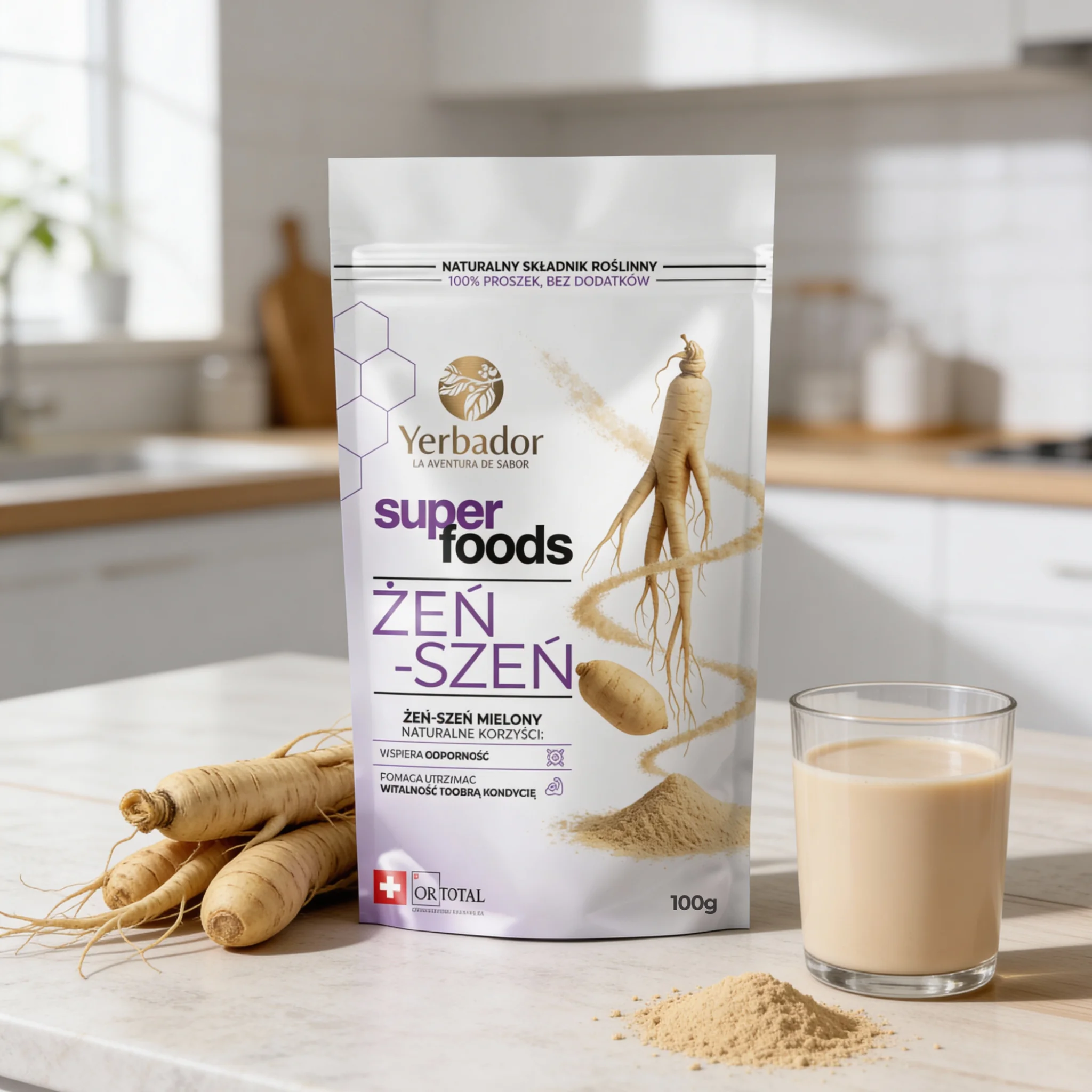
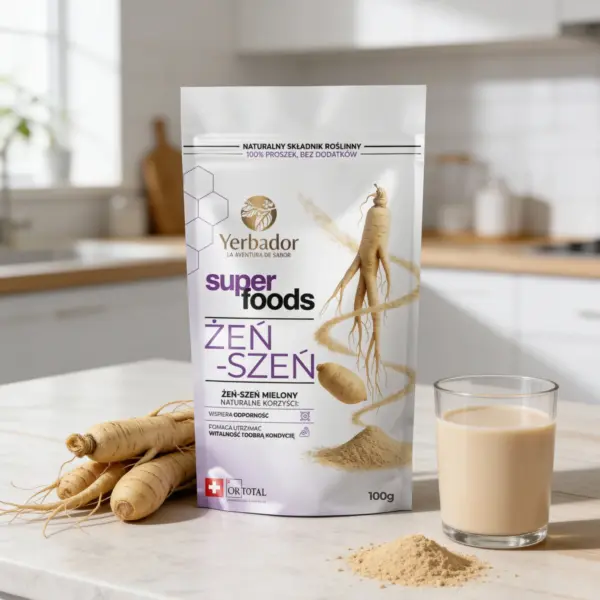
Yerbador Ginseng Powder, 100 g – check the current price. The ingredients are exclusively powdered Siberian ginseng root, with no additives. One serving is 3 g per 200 ml of liquid, and the pack lasts about a month at one serving a day.
Check out the product: Ginseng Powder 100 g
If you’re still building your set of adaptogens and superfoods, it’s worth knowing the other products in this category in our store:
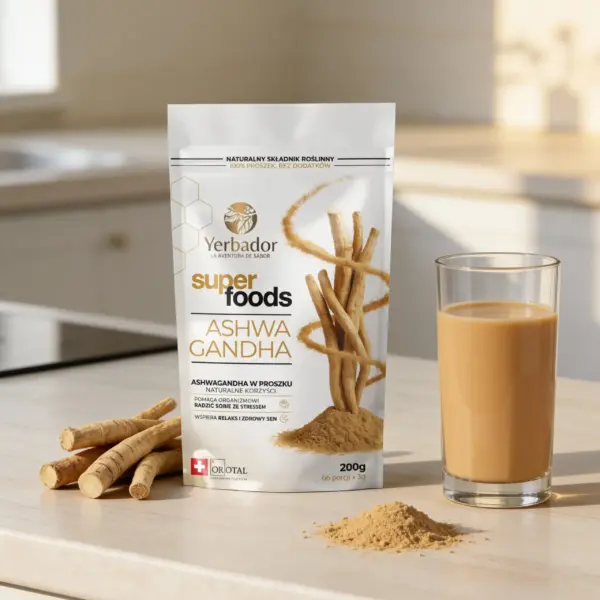
- Ashwagandha Powder 100 g. Another adaptogen, traditionally associated with calm and relaxation rather than stimulation – a good evening complement if you drink ginseng in the morning.
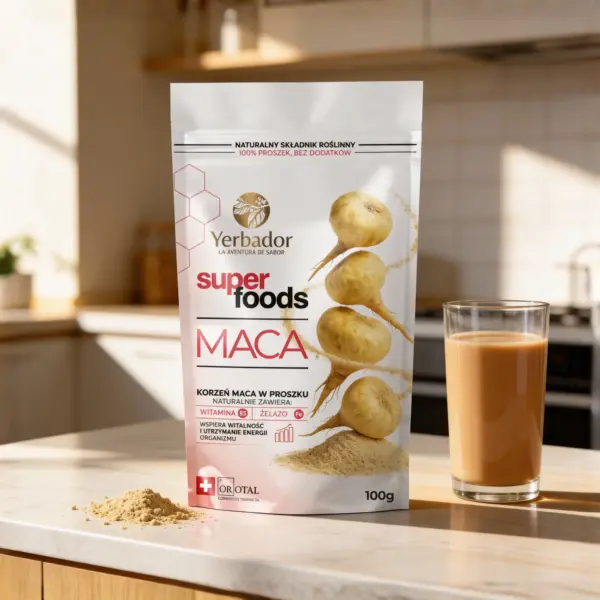
- Maca Powder 100 g. A root from Peru, a source of vitamin B6 and iron, a popular smoothie addition with a spicy, slightly nutty taste.
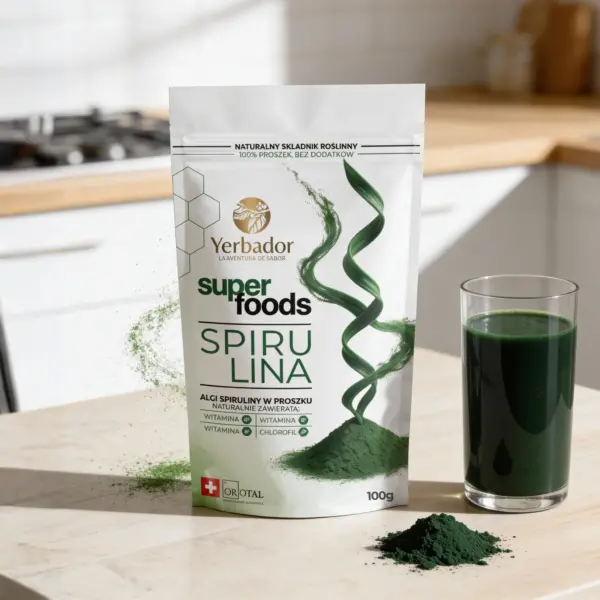
- Spirulina 100 g. A cyanobacterium rich in iron and vitamin B12, a completely different profile from roots – for anyone who wants to combine plant powders with algae.
There’s no need to take everything at once. Start with one product, check how your body reacts after a few weeks of regular use, and only then consider adding more.
Frequently asked questions
Il ginseng in polvere di Yerbador è lo stesso ginseng del Panax ginseng?
No. This is Siberian ginseng, also known as eleuthero (Eleutherococcus senticosus) – a different species from the same botanical family as Asian Panax ginseng, but with a different profile of active compounds. It should not be credited with effects studied specifically for Panax ginseng.
How much Siberian ginseng should you take daily?
The manufacturer recommends 3 g of powder daily, dissolved in 200 ml of water, juice, yoghurt or tea. This is the dose at which a beneficial effect is achieved – there’s no reason to increase it on your own.
How long does a 100 g package last?
With one daily serving (3 g), a 100 g package lasts about 33 days, roughly a month of regular use.
Can ginseng powder be taken in the evening?
Eleuthero doesn’t contain caffeine, so at typical doses it shouldn’t disrupt sleep. Some people drink it in the morning out of habit, but if you notice stimulation after an evening dose, move it to an earlier time of day.
Chi dovrebbe consultare un medico prima di assumere il ginseng siberiano?
Pregnant and breastfeeding women, people taking thyroid medication, anticoagulants or psychotropic drugs, as well as those with autoimmune diseases or high blood pressure. Adaptogens can interact with medications, so if you’re on regular pharmacotherapy, consulting a doctor is a reasonable step, not excessive caution.
Scopri i nostri prodotti TOP!
La tua forma fisica ideale
Scopri i nuovi gusti
Yerba mate con tè
Accessori
Superfood
Mieli grezzi certificati dalla Polonia

Scopri il prezzo attuale
spedizione gratuita
Fino a 90 giorni
reso gratuito
24 H
shipping