
11 Scientific Reasons Why Yerba Mate Will Change
Your Life
Discover why South Americans have been reaching for yerba mate every day for 500 years – now science confirms what the Guarani people intuitively knew for centuries. Every sip is a dose of health backed by thousands of scientific studies.
#1 Energy without the crash
Do you know that feeling after coffee? A sudden rush, jitters, shaky hands, and after 3 hours a dramatic energy crash? Yerba mate works completely differently thanks to a unique combination of three alkaloids you won’t find in any other drink in the world.
Yerbador’s magic trio:
Mateine (0.7–2.0%) – the natural counterpart of caffeine, with a gentler and more stable effect
Theobromine (0.45–0.9%) – the same alkaloid found in chocolate, responsible for a feeling of well-being
Theophylline (0–0.17%) – dilates the bronchi, improves breathing and oxygen supply to the brain
#2: The most powerful antioxidants in nature
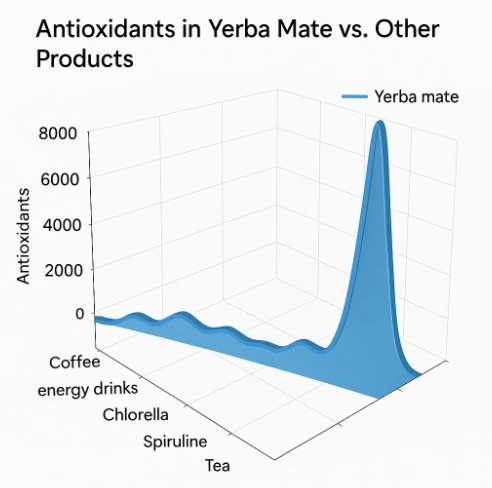
Imagine an army of bodyguards defending your cells against free-radical damage 24 hours a day. Yerbador isn’t just protection – it’s an elite molecular presidential guard for your body.
The practical effect: One serving of yerba mate (50 g) delivers antioxidants equivalent to 2 kg of berries, 500 g of dark chocolate and 1 litre of red wine.
Cellular protection mechanisms:
Antioxidants neutralise free radicals before they damage DNA
Caffeic acid regenerates vitamins C and E, boosting their activity
Protects mitochondria, which produce ATP without creating oxidative stress
Activates longevity genes (SIRT1, FOXO3) responsible for a long life
"Yerbador is pure excellence and the best thing I’ve ever drunk. A wealth of minerals, polyphenols, antioxidants – and the culprit behind my recent weight loss!"
Top sets
The healthiest Yerba Mate in the world
#3: Natural fat-burning support
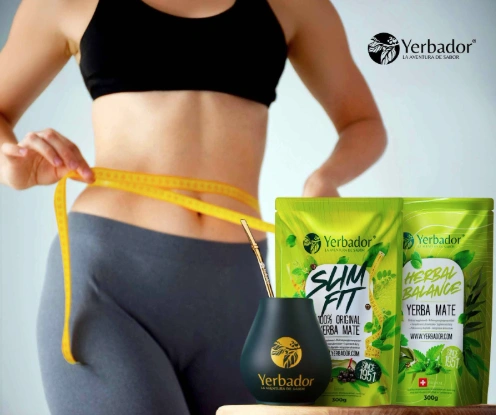
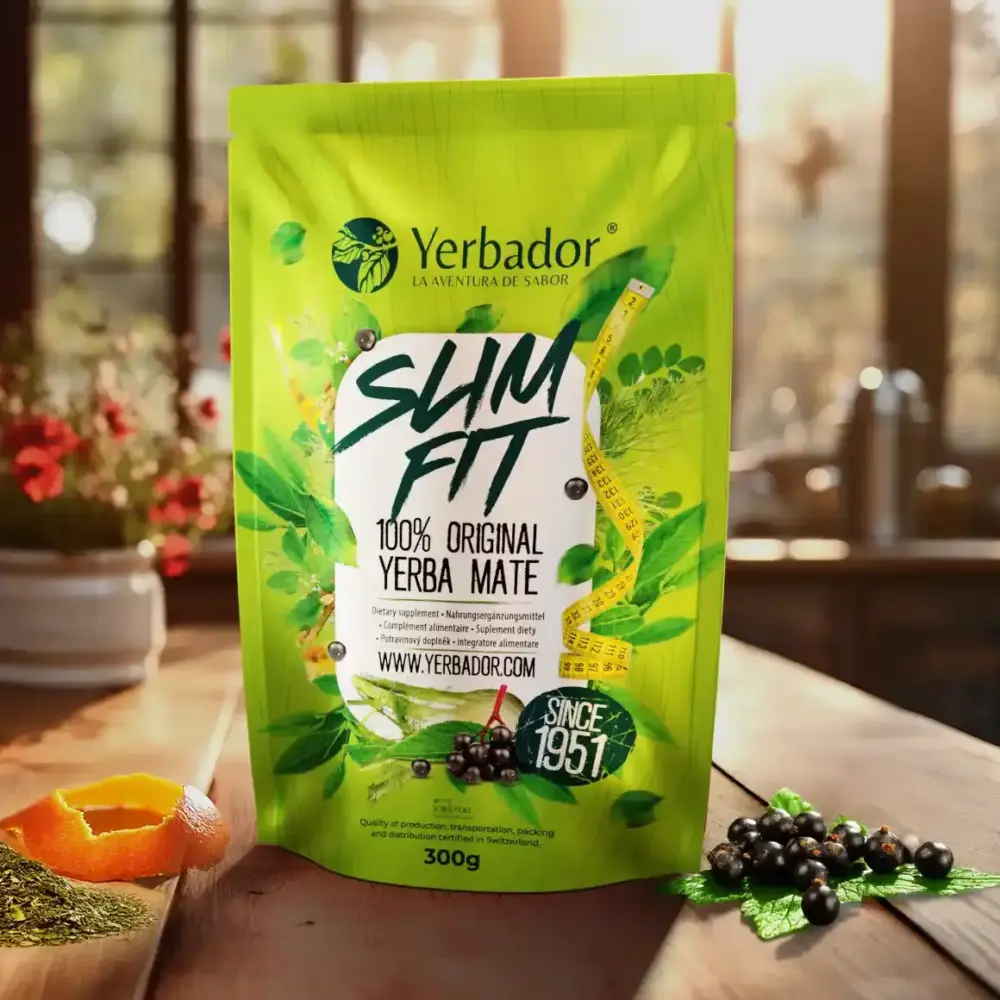
Your metabolism is a furnace that burns calories. After the age of 25 it "dies down" by 2-3% a year. Yet the people of Argentina and Paraguay, despite a calorie-rich diet (asado, empanadas), have the lowest obesity rate in South America. Their secret? Daily yerba mate.
How fat-burning support works:
Saponins and methylxanthines in yerba mate activate the sympathetic nervous system
Mateine + theobromine inhibit phosphodiesterase, increasing cAMP in adipocytes
Chlorogenic acid inhibits fatty acid synthase – the key enzyme converting sugars into fat
Saponins modulate satiety hormones
#4: Protection for the heart
and blood vessels
Heart disease is the world’s number 1 killer. Yet in Argentina, where yerba mate consumption is the highest in the world, heart attack rates are among the lowest in the region. That’s no coincidence – it’s the result of daily cardiovascular protection.
Cardioprotective mechanisms – scientifically confirmed:
Lipid profile regulation: Saponins block cholesterol absorption in the intestine and inhibit its synthesis in the liver
Vascular endothelium protection: Polyphenols increase nitric oxide (NO) production by 34%
Anti-inflammatory action: Caffeic acid and rutin reduce CRP (C-reactive protein) by 28%
Anti-platelet aggregation: Quercetin prevents blood platelets from clumping together (thrombosis)
#5: Detoxification
and liver protection
Your liver is a biochemical factory working 24/7, performing over 500 functions and filtering 1,500 litres of blood a day. In the 21st century it is overloaded: alcohol, medicines, pesticides, air pollution, stress. Yerbador is natural support for this overworked organ.
Hepatoprotective mechanisms:
Activation of detoxification systems
Protection of hepatocytes (liver cells)
Increased glutathione production
Hepatocyte regeneration
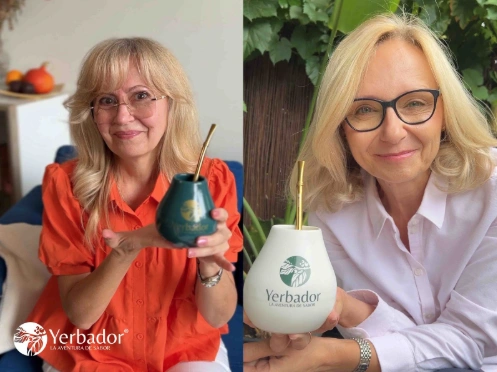
"For many years my daughter told me that Yerba Mate is a healthier alternative to coffee. Coffee may give you a boost, but it often comes with sudden energy spikes. Yerbador, on the other hand, gives me long-lasting vitality without sharp ups and downs."
Top picks
The healthiest Yerba Mate in the world
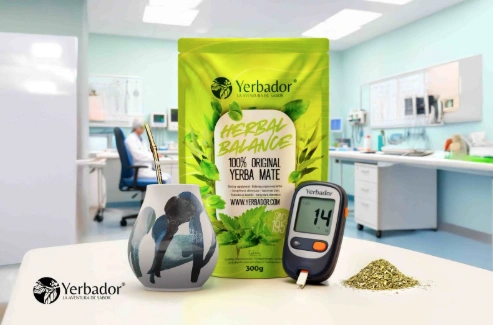
#6: Blood sugar regulation and protection against diabetes
Type 2 diabetes is the epidemic of the 21st century – 500 million people affected worldwide, 3 million in Poland. Despite their genetic predisposition, the indigenous peoples of South America have the lowest incidence rates. Research points to yerba mate as a key protective factor.
Anti-diabetic mechanisms confirmed by research:
Inhibition of α-glucosidase
Increased insulin sensitivity
Protection of pancreatic β cells
Regulation of gluconeogenesis
#7: Stronger bones
and protection against osteoporosis
Osteoporosis is a "silent killer" that weakens bones until they break, and it is especially dangerous for post-menopausal women. Studies in Argentina show that women who drink yerba mate for many years have stronger bones.
Osteoprotective mechanisms:
Increased calcium absorption
Stimulation of osteoblasts
Inhibition of osteoclasts
Anti-inflammatory action

#8: Support for the microbiome and gut health
The gut is the "second brain" – it produces 70% of serotonin, accounts for 80% of immunity, and its microflora (about 100 trillion bacteria) affects overall health. A healthy microbiome means a healthy life. Yerba mate is a natural food source for beneficial bacteria.
Mechanisms:
Selective growth of bacteria
Strengthening the gut barrier
Production of short-chain fatty acids (SCFA)
Immune system modulation
"Instead of coffee, try Yerba Mate – it supports weight loss and cleanses the body!"
New arrivals
The healthiest Yerba Mate in the world
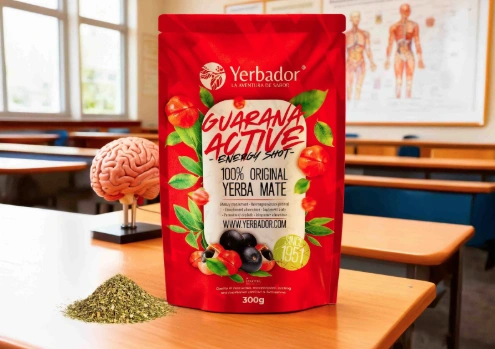
#9: Brain protection and prevention of neurodegeneration
The brain is the most energy-hungry organ – it uses 20% of the body’s energy and is highly vulnerable to free-radical damage. Neurodegenerative diseases affect millions worldwide. Populations that drink yerba mate show significantly lower rates of neurodegeneration.
Neuroprotective mechanisms:
Crossing the blood-brain barrier
Inhibition of β-amyloid plaques
Protection of dopaminergic neurons
Reduction of neuroinflammation
#10: Strengthening the immune system
The immune system is an army of 40 trillion cells protecting against viruses, bacteria and other pathogens. In an era of pandemics and resistant bacteria, strong immunity is the difference between health and illness. South American populations experience considerably fewer respiratory tract infections thanks to yerba mate.
Mechanisms:
Saponins and polyphenols increase the cytotoxic activity of NK cells by 47%
Caffeic acid raises the production of interferon alpha and gamma by 34%
Theobromine increases the phagocytic activity of macrophages by 52%
Rutin and quercetin raise interleukin-10 levels by 28% and lower interleukin-6 by 31%
#11: 500 years of tradition
and wellness culture
In the age of smartphones and social media, yerba mate offers something special – a moment of genuine connection with yourself, nature and a tradition older than most of the world’s religions.
History and philosophy: 15th century: The Guarani people of Paraguay and Argentina discover "Ka'a" – the divine plant. The leaves of Ilex paraguariensis not only stimulate, but also create a spiritual connection with nature and ancestors.
Guarani legends: According to mythology, the goddess of the Moon (Jacy) and of the Cloud (Araí) were saved by a Guarani warrior. In gratitude, the Moon gave him yerba mate – the drink of the gods, a symbol of wisdom, strength and brotherhood.
16th-19th century: The Jesuits establish the first plantations and popularise yerba mate across the entire continent – it becomes a currency, a medicine and a tool of social integration.
20th-21st century: Yerba mate becomes a global wellness symbol, and science confirms the wisdom of the ancient shamans.
Customers
240,000 happy Yerbador fans
Rating
4.8/5 stars on Google Reviews and Allegro
Certificates and studies
OROTAL, KIWA, HACCP, GBA Polska
Dietitians
A number of clinical dietitians recommend Yerbador
"For me, Yerbador is both a tasty, refreshing Yerba Mate and a support in every aspect of my sporting life. It’s a drink that gives me natural energy and focused alertness"
Accessories
The healthiest Yerba Mate in the world